opus 5 used to drop around 15 em dashes into every 1,000 words it wrote for you.
opus 5.5 drops less than 1.
this stat is from Arena, a AI benchmarking platform, which measured responses from both models across august and september. a 95% drop in the most recognisable AI tell on the internet, in a single release.
and i'll be real with you, i've been writing yt scripts on it every day since it came out on september 22nd, and i haven't seen a model this CRACKED for what we do. it beats fable 5.1 on the benchmarks anthropic published, it costs less, it runs faster, and for the first time the copy reads like a person sat down and wrote it.
meanwhile the whole timeline is testing it on code migrations.
which is fine, but it means almost nobody is talking about the part of this launch that matters most for faceless youtube. so in this article i want to walk you through 3 things.
first, why your script is worth way more than you think it is right now. second, what was broken about writing scripts with AI until a couple of weeks ago, and what opus 5.5 changed, with real numbers. and third, exactly how i set it up so your next upload reads human from line 1.
your script is most of the video, whether you like it or not
when i look at the channels that come to me, 9 out of 10 of them treat the script like 1 ingredient out of many.
it gets the same weight as the edit, the thumbnail and the voiceover. something to tick off quickly before the "real" work starts.
and i get why. editing feels like work you see happening. a script is a google doc.
but look at what youtube is telling you, in writing.
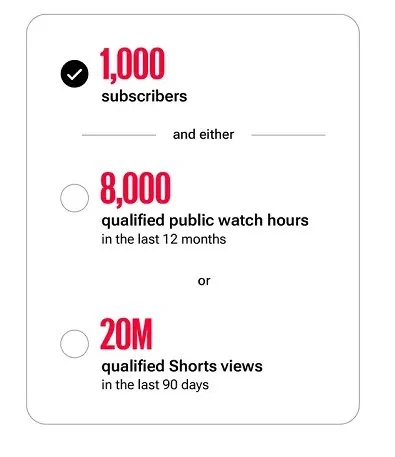
from february 1st, 2027, monetisation needs 8,000 watch hours in 12 months instead of 4,000. shorts go from 10M views in 90 days to 20M. they didn't touch a views requirement for long form. they doubled the watch hours.
because youtube makes its money on minutes watched. minutes watched is where the ad inventory lives. a 25 minute video only gets its 5 or 6 mid-roll slots if people are still around when those mid-rolls fire.
and who decides whether people are still around at minute 12? the words do.
the thumbnail gets people through the door and the edit carries the words, but the script is the thing keeping them in the room. so when your RPM is low or your watch hours are crawling, the first place i'd look is the script, every single time.
your income gets decided before a single frame is rendered.
retention is the 1 number nobody fakes
think about every other signal on the platform for a second.
likes get bought. comments get botted. subscribers get farmed. CTR gets pumped with a misleading thumbnail, and even views go up for a week if the clickbait is good enough.
what nobody fakes is a real person watching 85% of your video and then coming back tomorrow for the next one.
that's the closest thing youtube has to customer satisfaction, and it's why the algorithm trusts it over everything else. a video with 2M views and 10% retention looks to youtube like a perfect fingerprint of clickbait, and that's the kind of video that quietly stops getting served.
no edit in the world forces someone through a dead script either. even if a crazy edit drags a viewer through it once, they don't come back, and returning viewers are the whole game here.
a 1 time click is a scam you run on yourself.
youtube reads your script before any human does
this is the part 9 out of 10 creators never think about.
your transcript is the most detailed version of your video youtube has. every word gets scanned and compared against everything else on the platform.
in july 2025 youtube renamed its "repetitious content" policy to "inauthentic content", and the systems enforcing it read your words long before a human reviewer ever looks at your channel.
so slop gets clocked fast. the same 40 or so words every AI loves, the same rhythm, the same fake drama, the same nothing said 3 different ways.
and a script with real specifics, a real rhythm and an opinion behind it gets read the other way, as a human running the channel.
and your viewers are reading it too
there's a second layer here, and this is where the long term money sits.
viewers are drowning in AI slop right now, so they come into every faceless video with their guard all the way up. they distrust the voice, they distrust the stats, they distrust you before you've said a word. i call it the trust recession.
the channels breaking through it all share the same 3 things: specifics, receipts, and a voice the viewer starts recognising after 2 or 3 videos.
that's what turns someone who clicked once into someone who binges your whole channel on a sunday. and the bingers are the people who buy the day you launch a PDF, a community, or anything else under the channel.
this goes double if you're running an AI avatar, which everyone seems to be doing right now. the avatar gives the channel a face, but only the script gives it a personality. without a good script, your avatar is a mannequin.
nothing saves a bad script, dude
not the $2,000 a month editor. not the perfect title. not the genius idea you found on a forum at 3am.
a beautiful package around a dead script only means more people find out faster that your video wasted their time. packaging multiplies the script, and anything multiplied by 0 stays 0.
(quick side note: i turned everything i know about writing scripts at this standard into skill files, trained on 10,000+ scripts across 100+ niches. they're all at fyreinteractive.co/facelessos. anyway, back to opus.)
the AI "smell" that never fully left
ok, now the part anyone who's written scripts with claude already feels in their chest.
before this release, it didn't matter how many skill files, project memories or rules you stacked. you'd get the script back and something would still feel off.
the hooks landed softer than they should have. the voiceover sounded like every other faceless channel on the feed. and even after a full edit, there was this smell that followed the script around from tab to tab.
you know exactly what i mean. em dashes everywhere, "it's not X, it's Y" in every second paragraph, "actually" and "really" sprinkled through every line, those "here's the thing nobody talks about" transitions, and that weirdly polished rhythm where every sentence lands the same way, like a metronome.
viewers clocked it in seconds, and youtube clocked it before they did.
a 13 year old gaming audience cringes at it and scrolls past. a 60 year old world history audience goes 1 step further and reports you.
it was like a receding hairline. 1 glance and the whole face reads different, no matter how good everything else looks.
every model was broken in its own way
i've run thousands of scripts through every claude model this year, and each one failed somewhere different.
sonnet was cheap and fast, and it forgot your voice about 3 prompts in. great for bulk stuff, terrible for anything a viewer has to believe.
opus 5 was good. the reasoning held up and the voice lasted longer. but the tells kept leaking through, and by script 5 in the same session you were editing more than you were writing.
fable 5.1 remembered everything and researched like a monster. it also cost a fortune per script and still came out robotic in places, which kills it if you're running 4 to 7 uploads a week.
so the bottleneck was never the research or the reasoning. the whole time, it was the writing itself.
Get the free hook guide
5 faceless hook patterns that retain 60%+ of viewers. Plus the scriptwriting newsletter, a few emails a week when something is worth sending.
You get the guide and my newsletter, with the occasional FacelessOS offer. Join 1,000+ creators on the list. Unsubscribe any time. Privacy.
what opus 5.5 changed (with numbers)
anthropic shipped opus 5.5 on september 22nd as the first model in their 5.5 family. here's what matters for us, from their own announcement and the independent measurements since.
the writing finally sounds human
Arena compared responses from august and september 2026.
em dashes went from 15.2 to 0.8 per 1,000 words. semicolons went from 6.10 to 1.64. the average sentence got shorter too, from 12.14 words to 10.03, which is exactly the punchier rhythm voiceover needs. 10 of their 12 writing measures got better.
on top of that, anthropic says the model puts the most important information first, avoids jargon and weird pet phrases, and follows the writing rules you give it. 1 early tester described it as "it writes the way I do."
that last part is the one i care about most, because a model that follows your rules means your rules finally do their job.
it stopped making stuff up
this one is huge for faceless.
anthropic ran a test where opus 5.5, fable 5.1 and opus 5 each wrote a company report, and an automated grader checked every number and every quote against the sources. 1 invented figure and you fail.
opus 5.5 passed 16 times out of 18.
fable 5.1 and opus 5 passed 0 times.
think about what that means in a trust recession, where channels get exposed in their own comment sections for fake stats every week. the model least likely to invent a fact is the only one i'd want anywhere near my scripts.
it beats fable, and costs less
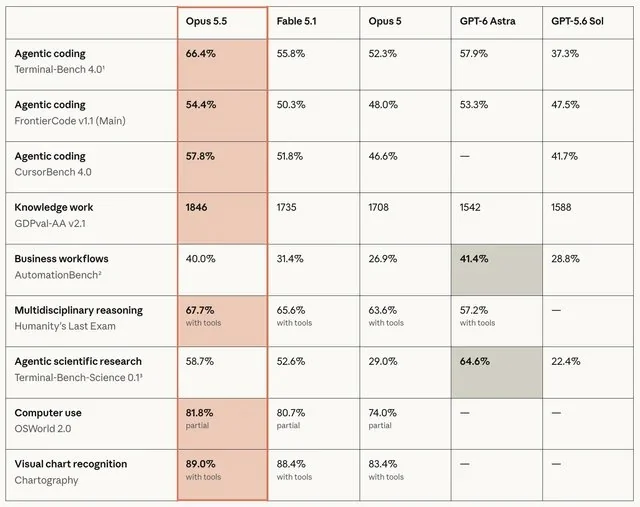
on anthropic's benchmark card it beats fable 5.1 across the board: 66.4% vs 55.8% on terminal-bench 4.0, 1846 vs 1735 on GDPval-AA (real professional work across 44 occupations), and 58.7% vs 52.6% on terminal-bench-science, which is the deep research test.
the price is $4 per million input tokens and $20 per million output, with cache reads at $0.20. that's about 40% cheaper to run than opus 5, and it's 30%+ faster.
and on 1 head to head job anthropic ran against fable 5.1, opus 5.5 finished 2.5 hours earlier and cost 51% less.
so for the first time ever, the research, the reasoning, the price and the voice all line up in 1 model.
why faceless channels win the most from this
a coder doesn't care if their output has 15 em dashes in it. the code runs or it doesn't.
your output gets read out loud to a stranger who decides in about 8 seconds whether you sound like a human worth listening to.
so every tell you used to scrub out by hand was a tax on your volume. if your editing pass took 40 minutes a script and you post 5 times a week, that's over 3 hours a week spent removing the robot.
opus 5.5 hands most of those hours back to you. and the hours you keep go into the stuff a model still doesn't do for you: taste, fact checking, and knowing your audience better than anyone else does.
how i run scripts on opus 5.5
here's the setup i use. nothing fancy, a claude account and about 20 minutes gets you going.
step 1: build a project, not a chat
make 1 claude project per channel. inside it goes your skill files (the facelessOS files if you run them, your own instructions if you don't), 3 to 5 transcripts of your best performing videos, and 3 to 5 transcripts of outliers in your niche, meaning videos doing 5x+ their own channel's average.
then add a 1 page note on your channel: who watches, what they already know, the words they use, and the stuff you'd never say.
the reason is simple. a model with no context writes for nobody, and a model with your channel loaded writes for your viewer.
step 2: give it your writing rules once
paste this into the project instructions and tweak it for your channel:
you write youtube voiceover scripts for [CHANNEL], a faceless channel about [NICHE]. the viewer is [AUDIENCE: age, knowledge level, why they watch]. writing rules: - write for the ear. every line has to sound natural read out loud. - no em dashes, no semicolons. - never use "it's not X, it's Y" or "this isn't X, this is Y" constructions. - no "actually", "really", "literally", "delve", "tapestry", "furthermore". - vary sentence length on purpose. never 3 sentences of the same length in a row. - every sentence adds new information or moves the story. delete the rest. - specifics over adjectives: names, numbers, dates, places. - mark every factual claim with [SOURCE?] if you are not certain of it.
opus 5.5 follows rules like these way more reliably than anything before it, and that 1 block replaces most of your old editing pass.
step 3: research before you write anything
think hard on this. the video is: [TITLE] / thumbnail shows: [THUMBNAIL]. before writing anything: 1. list what a casual viewer already assumes about this topic. 2. find the 5 most surprising verified facts, each with its source. 3. find the single moment of highest tension in the story. 4. tell me which fact breaks the viewer's assumption hardest. do not write the script yet.
this is where that 16 out of 18 score pays you back. still check the sources it hands you though. 10 minutes of fact checking protects a channel that took you months to build.
step 4: outline first, then draft
using the research above, outline the script: - hook (first 50 words): confirm the title's promise inside 8 seconds, open 1 loop. - 4 to 6 sections. each one closes the previous loop and opens the next one. - a mini payoff every 90 to 120 seconds. - the main payoff lands in the final stretch. the video ends right after it. show me the outline first. after i approve it, write the full script.
always approve the outline before the draft. fixing structure in an outline takes 2 minutes. fixing it in a finished script takes an hour and breaks something else on the way.
step 5: run the audit
audit this script like a strict editor: 1. flag any line that sounds AI-written, and rewrite only those lines. 2. flag any 3+ sentences in a row with the same length or structure. 3. flag every claim without a source. 4. read the hook as a viewer who has never heard of this channel. would you stay past second 8? if not, rewrite it.
on the old models this pass rewrote half the script. on opus 5.5 it touches a handful of lines on 9 out of 10 scripts.
where the skill files come in
everything above is the generic version, and it'll already put you ahead of 9 out of 10 channels in your niche.
the facelessOS skill files replace steps 2 to 5 with instructions pulled from 10,000+ scripts: the hook frameworks for each format, where the loops open and close, where the payoffs land, and a dedicated anti AI file that scans for the cluster of 40 or so words that give AI away.
you drop them into the project, give it your idea, and the files handle the structure while you handle the taste.
1 creator in the facelessOS community stacked 1,397,122 views and 264,200 watch hours on a single video, running claude opus with the files underneath his own channel notes. the files carry over to every new model the day it ships, so opus 5.5 made them better overnight.
the questions i keep getting
"won't youtube catch AI scripts anyway?"
youtube catches slop. the system reads patterns and outcomes, and it has no idea which tool you opened. a script with real specifics, varied rhythm and a clear point of view reads human because a human made the decisions inside it. opus 5.5 removes most of the surface tells, and your job is the judgment underneath.
"if the model writes human now, why do i need skill files?"
because sounding human and writing a script that holds 70% at the 1 minute mark are 2 completely different skills.
opus 5.5 fixed the first one. the second one is structure: where you enter the story, when the loops open, where the payoff lands. that's what 10,000+ scripts taught me, and that's what the files carry.
"sonnet is cheaper, i'll stick with it."
you'll save a few dollars per script and pay for it in retention. that gap is the difference between a hobby and a business, and it's worth way more than what you save on tokens.
the window is open right now
the coding crowd owns the opus 5.5 conversation at the moment.
faceless youtube, the most obvious winner of a model that writes human, researches without making things up and costs 40% less than opus 5, is almost silent about it. and that won't last past the first wave of "opus 5.5 full course" videos.
what i see often is lack of action because of overthinking. run opus 5.5 on your channel TODAY. don't fall into the common trap of trying to account for every variable or being scared because you've never used ai like this before. simply follow the steps and FULL SEND!!
so if you're going to switch, switch now, while the people you compete with are still pasting prompts into whatever model they used last year.
i break down how we fold every new model into the scriptwriting system in my newsletter, before any of it turns into public content: fyreinteractive.co/newsletter
and if you want the shortcut:
if you want the skill files that turn opus 5.5 into a human-sounding script machine for your channel, built from 10,000+ scripts across 100+ niches, they're at fyreinteractive.co/facelessos.
haris
keep reading
Get the free hook guide
5 faceless hook patterns that retain 60%+ of viewers. Plus the scriptwriting newsletter, a few emails a week when something is worth sending.
You get the guide and my newsletter, with the occasional FacelessOS offer. Join 1,000+ creators on the list. Unsubscribe any time. Privacy.
The best YouTube scriptwriting system in the world.
Built by a scriptwriter, not a prompt engineer. 22 skill files from 10,000+ scripts across 100+ niches: research, hooks, structure, a humanizer, and an audit that loops until the script passes. It runs inside the AI you already use. $799 once for Files, $1,299 for FacelessOS+. Every future version included. If your first draft isn't better than what you have now, DM @fyreinteractive and we fix your setup.
Get FacelessOS for $799