1 second of a short is worth more than 1% of your retention.
sit with that. on a 60 second video, every single second you waste costs you more than a full percentage point of the only metric YouTube trusts. a long form video forgives a slow sentence. a short executes you for it.
that's why the same channel posts 1 video to 34,000,000 views and a nearly identical one dies at 30,000. same niche. same editor. same voice. the opening sentences were the variable.
and that's why a 30 second short, written in 30 minutes, pulls close to $1,000 on its own while channels posting daily for a year sit unmonetised.
shorts are not a volume game. shorts are a precision game, and the precision lives in the script. i'm going to hand you the full anatomy we use across the 200M+ views we've generated, piece by piece.
the 8 second courtroom
before the anatomy, understand the judge.
a shorts viewer decides between second 5 and second 12 whether you live. they invested nothing to arrive at your video, so they owe you nothing. no click, no thumbnail, no commitment. the feed handed them your first frame for free, and free attention leaves the moment it stops being fed.
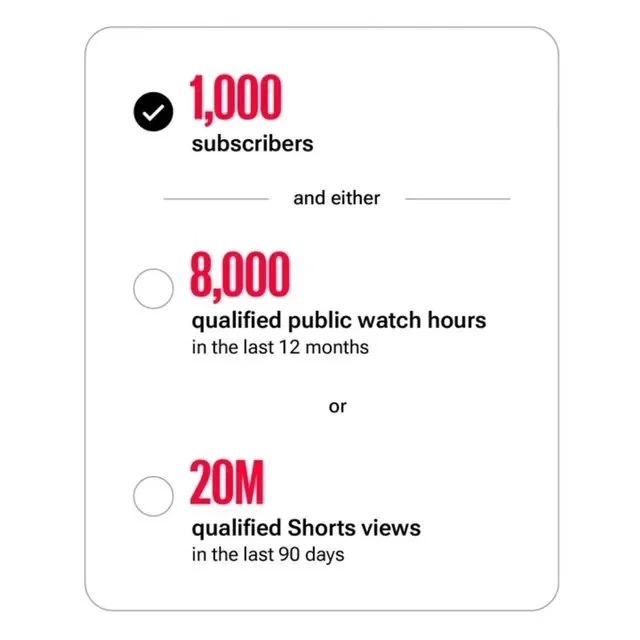
YouTube raised the shorts monetisation threshold from 10,000,000 to 20,000,000 views. weak creators cried. i celebrated, because a rising wall clears the tourists out of the niche while the operators who understand the next 5 sections keep printing.
so here's the anatomy: hook. context that moves. twist. payoff. cut.
each 1 has a single job. mixing the jobs is where nearly every script dies.
the hook has one job (and it's not educating)
the hook exists to stop the scroll and plant an expectation about the ending.
not to teach. not to introduce. not to set the scene. those come later. line 1 delivers the maximum possible information about why this video deserves 45 seconds, in the fewest possible words, while quietly promising a destination.
"this is why you should never underestimate someone" pulled 39,000,000 views on that structure alone. it plants 2 expectations in 8 words: somebody underestimated someone, and a lesson lands at the end. the viewer now holds an open loop their brain refuses to leave unresolved.
for faceless content, run the character, concept, stakes framework. name who this is about, the 1 idea the video lives on, and what gets lost or won. then stack exactly 3 psychological triggers, no more: curiosity gap, specificity, dramatic stakes. stacking 5 triggers reads desperate. 9 out of 10 hooks i audit fail from either mixing frameworks or overloading triggers.
and foreshadow with a scalpel. tease the destination, never the answer. the moment the viewer completes the pattern themselves, the video is over whether you finished or not.
a masterclass in 6 sentences
want to see every principle compressed into 1 short?
a channel called The Art of War posted a short about the charlie kirk shooting case. it opens mid-scene: he fired the bullet, and when convicted, guards will strap him to a chair and place a paper target over his heart. then the mechanism unfolds with surgical specificity: 5 volunteer officers, special fragmenting rounds, a tiny hole in the prison wall. and the final line lands the twist that reframes everything before it: the shooters stay anonymous, so every one of them sleeps peacefully.
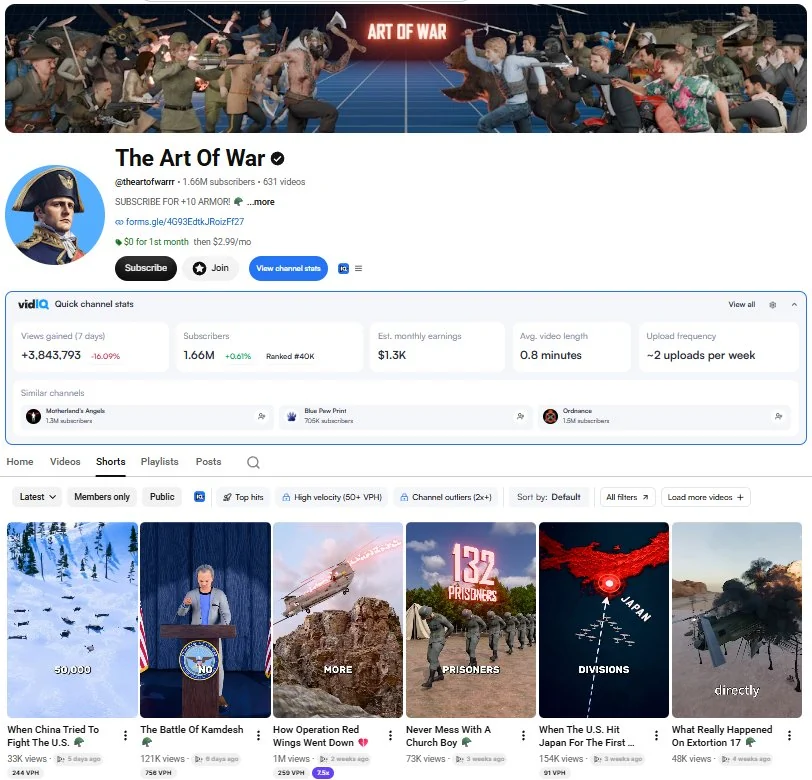
no intro. no "today we're talking about". the viewer is INSIDE the room by word 6, every sentence adds a mechanism the previous one didn't have, and the ending gives them a fact worth screenshotting.
that's the standard. everything below shows you how to build it on command.
(if you'd rather have the machine trained to write at this standard for you, my skill files were built on 8,000+ scripts exactly like this one. DM me "SHORTS" and i'll send you the details. now, the engine room.)
context that moves, or context that kills
after the hook, amateurs explain. professionals advance.
every sentence in the body must move the story forward while carrying its own context. the trick is grammatical, and it's stupid simple once you see it:
- "because" builds context while pushing forward
- "but" turns the story
- "so" resolves and re-tensions
"i went outside. it started raining. i went home." dead on arrival. "i got bored, SO i went for a walk, BUT it started raining, so now i had a problem." same events, alive, because every clause is a small conflict getting created or resolved.
never write a sentence whose only job is existing. if a line adds zero new information, delete it and watch your retention graph thank you. and never insult the viewer by over-explaining what the visuals already said. which brings us to the technique almost nobody in the faceless space uses.
dual narrative: the second story
the best shorts tell 2 stories at once.
the voiceover carries story 1. the visuals carry story 2. the viewer's brain fuses them into something richer than either alone, and you save 15 seconds of runtime you'd have burned narrating context.
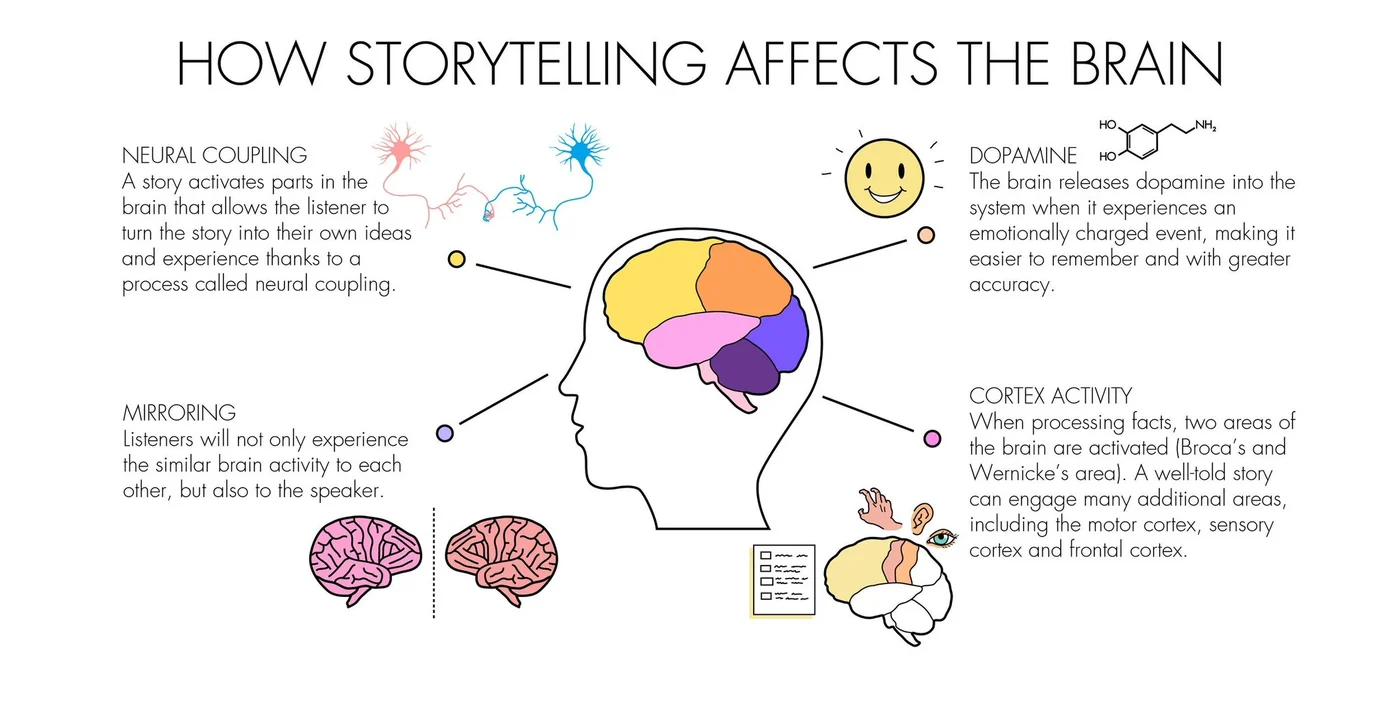
your script says the guy challenged a rider to a race. the footage shows the scoreboard arrow never once falling behind. you never say "he was winning the whole time" out loud. the viewer discovers it, and discovery beats being told, every time, in every niche.
this is why we script visuals with markers, not vibes: [CLIP], [B-ROLL], [TEXT], [HOLD]. the second narrative gets written, not improvised in the edit.
the twist and the breadcrumb pullback
somewhere past the midpoint, the story needs to turn.
a hidden identity. a reversed assumption. a "but the catch is". the twist takes a linear story and folds it, and folded stories hold attention because the viewer must re-evaluate everything they already watched.
then, right after the twist, do the counterintuitive thing: pull back. feed a breadcrumb, then return to the main line for a beat before paying anything off. the viewer who just tasted the twist leans in harder during the pullback. tension you release immediately was never tension. tension you hold for 2 extra sentences becomes investment.
one more body weapon while we're here: social framing. "people are becoming concerned about this bodybuilder" outperforms "you should be concerned" because humans calibrate their reactions against the crowd. frame your stakes as the crowd's reaction and the viewer joins the crowd automatically.
the payoff and the guillotine
payoff placement is math, not art: it lands in the third quarter to final stretch, and the video ends the SECOND it lands.
the moment the viewer receives what the hook promised, their reason to exist on your video evaporates. every additional sentence after the payoff bleeds retention at that brutal 1-second-per-percent exchange rate. cutting 1 beat too early reads as 105% retention through re-loops. cutting 1 beat too late reads as 95%. always take the early cut.
this is the payoff void principle from long form, compressed: a payoff with nothing after it demands the video end. we've watched channels fix nothing except this and move from a $3 RPM profile to $14.50, because the algorithm reads a clean ending as satisfaction, and satisfaction is the 1 signal no bot farm manufactures.
skip the "like and subscribe" outro on shorts. the retention cost eats the engagement gain in nearly every niche. if you must, tie it to the emotion of the payoff in 5 words or less.
the rehook: reminding them why they came
one more mechanism, small on the page, massive on the graph.
somewhere in the middle of the short, after the context has run for a stretch, drop a single line pointing back at the original question. "but how did any of this turn into him hating the biggest name on the platform?" the viewer, half-hypnotized by the story, gets snapped back to the reason they stopped scrolling in the first place.
think of it like a dealer at a table keeping the whale's eyes on the felt. the moment attention drifts toward the exit, the dealer says the number out loud again. the rehook is that number. 1 per short, placed right before the twist, and the mid-video dip on your retention graph flattens out.
"my niche is different" and other expensive beliefs
3 objections show up every time i teach this, so let's kill them here.
"my editing is the problem, not my script." run the test: mute one of your dead shorts and read only the captions. if the words don't pull you forward on their own, no cut speed saves them. editing multiplies a script. multiply 0 by anything and you know the result. the 34,000,000 vs 30,000 case above ran through the SAME editor.
"this structure won't work in my niche." the anatomy isn't a niche strategy, it's how human attention behaves under a 60 second clock. history, fitness, finance, true crime, gaming: the nouns change, the physics don't. what changes per niche is curiosity spacing and vocabulary, which is exactly what the retention graph teaches you inside 20 uploads.
"i'll write better with practice, no system needed." practice without a structure means repeating your mistakes with more confidence. i wrote 1,000s of scripts before these patterns crystallized, and the entire point of handing you the anatomy is collapsing those years into 1 article. the reps still matter. the reps against the RIGHT template matter 10x more.
buckets: how 1 viral short becomes a channel
a viral short with no siblings is a lottery ticket. a viral short inside a bucket is a distribution machine.
buckets are repeatable formats with near-identical structure and titling. when video 14 in the bucket hits, YouTube reads the metadata chain and knows exactly who to show videos 1 through 13, and who to serve video 15 the hour you upload it. returning viewers, the strongest signal on the platform, come from buckets, not from range.
pick 2 to 4 buckets. run them until the data tells you otherwise. read the retention GRAPH, not the percentage, to see the exact sentence where each video bled, and fix that sentence class across the whole bucket.
this is how a student channel goes from 20,000 daily views to 300,000 to 500,000 daily in 2 months without a single production upgrade. one of ours hit monetisation in 3.5 hours off 490,000 views on 1 video. another, killua, stacked 1,397,122 views and 264,200 watch hours running claude with the facelessOS skill files underneath his own custom instructions. the structure was the upgrade.
the standard, compressed
- hook stops the scroll AND plants the ending, 3 triggers max
- every body sentence moves the story or dies
- but/so chains, never "and then" chains
- visuals carry a second narrative the voiceover never states
- twist past the midpoint, breadcrumb, pull back
- payoff in the final stretch, cut on impact
- buckets turn wins into a system
i publish deeper teardowns of scripts like the execution short every week inside the newsletter, including the ones too spicy for the timeline: fyreinteractive.co/newsletter.
and if you want the machine version of everything above:
if you want the exact AI scriptwriting skill files that write shorts to this standard for you, trained on 8,000+ scripts across 50+ niches, DM me "SHORTS" and i'll send you everything
(200M+ views and $5M+ generated through AI scriptwriting skill files, one-time payment, every future version included)
haris
keep reading
Put this into every script you write
FacelessOS is 22 skill files built from 8,000+ scripts across 50+ niches. It works with any AI. 300+ creators are using it. $699 one-time for Files, $1,199 for FacelessOS+. No subscription.
Get FacelessOS