
i've written 8,000+ youtube scripts across 50+ niches.
and the techniques which ACTUALLY move retention graphs have almost nothing to do with what youtube educators teach. better hooks, tighter editing, more b-roll: all of these are surface work.
the techniques below operate at the structural level. they're invisible to the viewer, invisible to the editor, and live inside the script's architecture. they're the reason some faceless channels hold 60 to 70% retention on 15-minute videos while everyone else bleeds viewers by minute 3.
i've never shared these in 1 place before. a few of them go directly against what the "retention experts" on X are preaching.
technique 1: the payoff void audit (and the mid-roll revenue fix)
this is the technique which turned a channel from $3 RPM to $14.50 RPM. and it has NOTHING to do with the hook.
youtube's mid-roll ads fire at the 30 to 40% mark of your video. for a 10-minute script, the first mid-roll sits at minute 3 to 4.
now look at what happens in 70% of scripts at EXACTLY this timestamp.
the creator delivered a useful insight, a solid data point, a mini payoff the viewer genuinely valued. then the script moved to the next section. no new curiosity gap opened, no unresolved question pulling the viewer forward.
for 30 to 60 seconds, the viewer is in a state of completion. they received something valuable. walking away feels cost-free.
i call this the payoff void. and the first mid-roll ad fires DIRECTLY inside it.
the viewer leaves before the ad plays, counted as a view on your dashboard but generating $0 in revenue.
the fix takes 1 sentence. within 10 seconds of every mini payoff, open a new curiosity gap. "but this leads to something even more disturbing" or "and the data from the next section contradicts everything i showed you above."
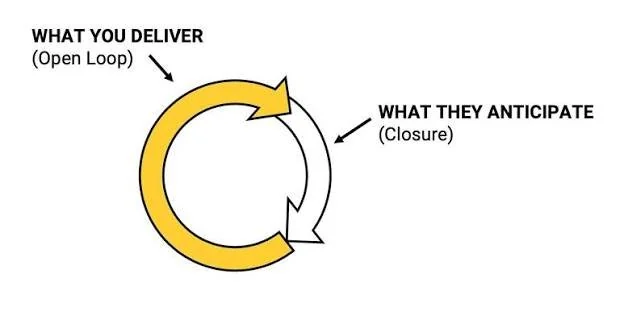
1 sentence, and the viewer's brain registers something unresolved. leaving before resolution feels wasteful, so they stay past the ad placement.
the channel i audited had 800,000 views per month and $2,400 in revenue. $3 RPM in a niche averaging $12. the retention graph showed the payoff void hitting at minute 3 on EVERY upload.
we added curiosity bridges after every mini payoff. RPM went from $3 to $14.50. the view count dropped from 800K to 400K, and the revenue went from $2,400 to $5,800.
the 400,000 views which disappeared were phantom views: not literal $0 (closer to pennies each), but the RPM math is what matters. the 400,000 who stayed were the viewers watching past the ads.
if you're sitting on high views and low RPM, check your scripts for the payoff void. it's there. i guarantee it.
technique 2: point ordering psychology (2nd, 1st, 3rd)
every content creator's instinct is to lead with their strongest point.
this instinct is wrong.
the data from 8,000+ scripts shows a counterintuitive pattern: the scripts with the highest completion rates put their BEST point in the middle, not the beginning.
the ordering which holds: lead with your 2nd best point, place your BEST in the middle where engagement peaks, finish with your 3rd best.
the psychology behind this is simple. if you lead with your strongest point, where do you go from there? down. the viewer's brain registers a declining trajectory. each subsequent point feels weaker than the last, even if the information is equally valuable.
when you lead with your 2nd strongest, the trajectory goes UP. the viewer hits your best point at the midpoint and experiences an escalation. the 3rd best point closes the video on a "good" note which still sits above where they started.
the escalation creates the perception of progressive revelation. the viewer feels like the video KEPT getting better.
i track this across every script i write. inside a batch of 40 true-crime scripts i A/B tested in Q2 2026, the 2nd-1st-3rd ordering outperformed 1st-2nd-3rd ordering by 15 to 25% on completion rate. same content, same hooks, same editing. the only variable was the ORDER.
technique 3: niche-calibrated curiosity spacing
this is the advanced version of curiosity gap chaining which nobody on X is talking about.
the standard advice is "plant curiosity gaps throughout your script." vague, useless, and missing the how. how frequently? where? based on what?
the answer changes by niche. and getting the spacing wrong kills retention even when the gaps themselves are well-written.
for mystery and true crime scripts, curiosity triggers need to land every 30 to 45 seconds. these topics generate higher baseline engagement, and the viewer's attention cycle is shorter because they're in "detective mode." they process information faster and need the next clue sooner.
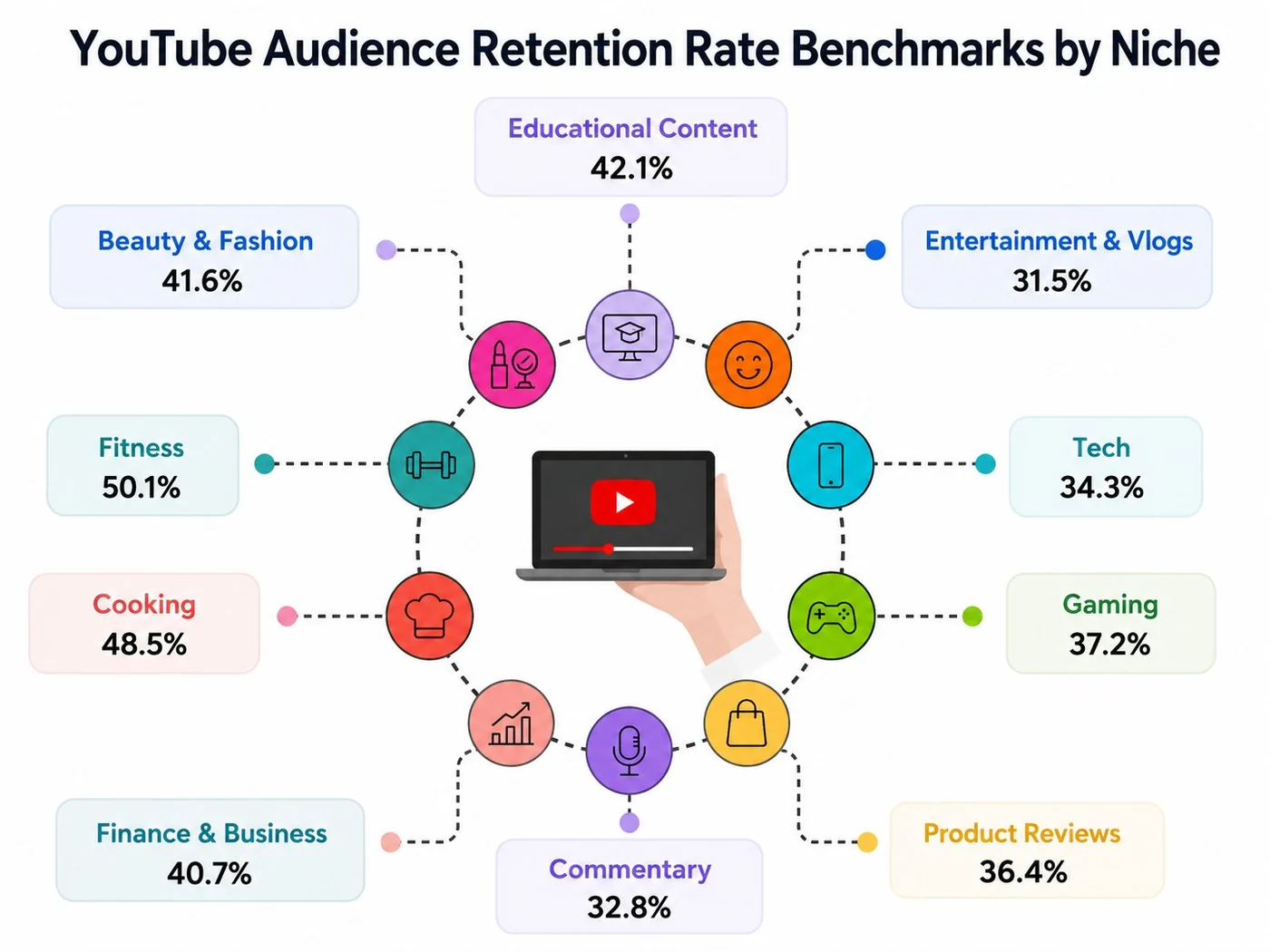
for educational content, the spacing stretches to 45 seconds to 90 seconds. these viewers expect more substantial information chunks between triggers. spacing them too tightly makes the content feel manipulative. they need to absorb the lesson before the next gap opens.
for documentary and biographical content, the sweet spot sits at 60-second intervals. the pacing matches the viewer's expectation of narrative progression. a reveal every minute keeps the story moving without rushing the emotional beats.
i built these intervals from retention data, not theory. across 50+ niches and 8,000+ scripts, the spacing follows these patterns with almost 0 variation. the creators who accidentally nail the spacing for their niche consistently outperform creators with "better" content who get the spacing wrong.
technique 4: the grand payoff foreshadowing protocol
your hook makes a promise, your title confirms the promise, and your thumbnail visualises it.
the question is: does the viewer remember this promise by minute 8?
in 70% of the scripts i audit, the answer is no. the hook promised something specific, then the script meandered through adjacent topics. by the time the payoff arrives in the final section, the viewer has forgotten why they clicked in the first place.
i call this the grand payoff betrayal. and it's the #1 reason viewers rate videos poorly on youtube's satisfaction surveys, which tanks your distribution.
the fix is a 3-point foreshadowing protocol.
foreshadow 1 (hook): the promise is established. "i'm going to show you the 4 mistakes killing your retention."
foreshadow 2 (minute 3): the promise is reinforced mid-script. "this was the 2nd mistake, and it costs more views than the 1st. but the 3rd one, the 1 which happens at the exact moment you think you've hooked them, is where the real damage sits."
foreshadow 3 (minute 8): the promise is escalated near the payoff. "we've covered 3 of the 4 mistakes. every single 1 is fixable in a single draft. but the 4th? this is the 1 which makes or breaks whether your video works as a system."
each foreshadow reminds the viewer why they're still watching. it reorients them toward the payoff. and it builds anticipation so the final section hits harder than if the payoff arrived without setup.
the scripts in my database which maintain 60 to 70% retention through the final third ALL use 3+ foreshadow points. the scripts which drop to 30% retention in the last 2 minutes almost never foreshadow past the hook.
technique 5: anticipatory attention triggers
this is the neuroscience behind why certain transition phrases hold viewers and others lose them.
when the brain encounters a signal important information is coming, it enters a state called anticipatory attention. neurological alertness increases and processing speed accelerates. the viewer is PRIMED to absorb the next piece of information.
as of October 2025, AI-generated content officially crossed the threshold to become the majority of the web, sitting at 53.5%. but here is the problem: because the internet is completely flooded with it, viewers have become incredibly savvy at pattern-matching the signatures of raw AI work instantly.
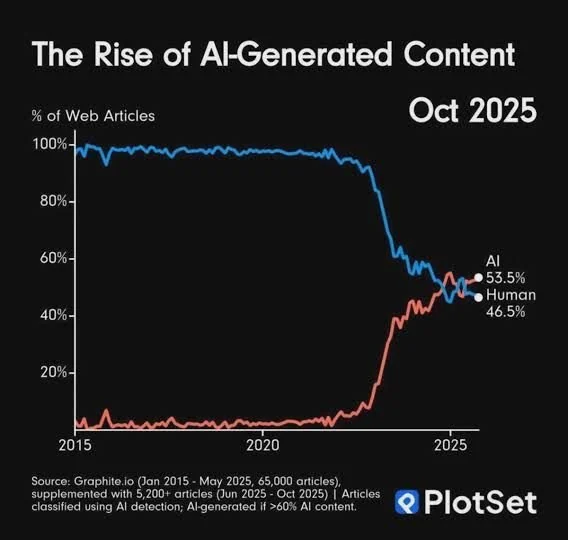
as of October 2025, AI-generated content officially crossed the threshold to become the majority of the web, sitting at 53.5%. but here is the problem: because the internet is completely flooded with it, viewers have become incredibly savvy at pattern-matching the signatures of raw AI work instantly.
certain phrases trigger this state reliably. i've tested these across 100s of scripts:
"but here's what they didn't know..."
"what happened next changed everything."
"the real story is even darker."
"and what investigators discovered will change how you see this."
these aren't random transitions. they're psychological triggers which exploit how the brain processes incoming information. each phrase signals something significant is about to happen, which triggers the anticipatory state.
the retention data is clear. scripts without these triggers lose 60% of viewers by the 3-minute mark, while scripts with properly placed triggers maintain 75%+ retention until the final third of the video.
the advanced application: i don't place these triggers randomly. i map them to the natural attention spans of different content types. true crime gets triggers every 30 to 45 seconds because the audience is in active pattern-recognition mode. educational content gets triggers every 60 to 90 seconds because the audience needs processing time between them.
the key is making each trigger feel like organic story progression. when viewers notice you're TRYING to keep them watching, the technique backfires. when the trigger feels like a natural escalation of the story, viewers think "this keeps getting better" instead of "this person is trying to manipulate me."
technique 6: the context-action golden ratio
this ratio holds across every niche i've written in. 8,000+ scripts across 50+ niches, and the ratio hasn't changed once.
30 seconds of context. 60 seconds of action or concrete examples.
context is setup. "this framework is based on how the brain processes incomplete information." this is context.
action is demonstration. showing a real script, pointing at a specific line, walking through how the technique works in practice. this is action.
the moment you stack context without action, retention drops. every time. i tested this specifically: scripts with buried value (90 seconds of context before any demonstration) averaged 42% retention in the first minute. scripts with proper value stacking (showing compelling examples up front) averaged 78%.
same content, same voiceover quality, and completely different written structure.
the analogy: trying to learn chess by listening to every rule before touching a piece. the brain rejects abstract rules without context. show the move first, then explain the rule.
if you're teaching something in a faceless script, skip the 90-second lecture. show 20 seconds of the concept in action, then explain why the concept works. the viewer stays because they've SEEN the concept proven before you asked them to invest in understanding it.
technique 7: the zeigarnik close (reframe, reveal, redirect)
this is the retention technique for the ENDING of your script. and getting it wrong costs you subscribers, not views.
every script ends. the question is whether the ending creates a subscriber or a 1-time viewer.
the standard ending: deliver the final point, summarise, sign off with "thanks for watching," done.
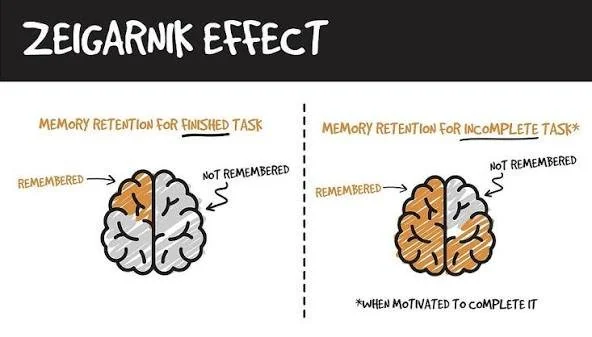
the zeigarnik close exploits a specific cognitive bias: the brain remembers incomplete tasks better than completed ones. by creating a new knowledge gap RIGHT after closing the current one, you make the NEXT video feel like an incomplete task in the viewer's mind.
the formula: reframe + reveal + redirect.
reframe what they learned in a new context. "so while the mystery remains unsolved, what we now know changes everything about how we think about small-town disappearances."
reveal there's more to the story. "but this case reveals a pattern investigators are only beginning to understand."
redirect their attention to future content. "next week, we're exploring 3 more cases which share the same terrifying connection."
the reframe satisfies the viewer's current curiosity (they don't feel cheated). the reveal opens a new gap (there's more they don't know). the redirect makes the only way to fill this gap be coming back to your channel.
channels which use this technique go from random 1-off viewers to building audiences which ACTIVELY seek out every upload. the written payoff promise transforms casual viewers into subscribers who binge.
the newsletter covers more of these advanced techniques every week: fyreinteractive(.co/newsletter)
the system behind the techniques
every technique in this article is baked into the FacelessOS skill files.
the payoff void audit runs automatically. the point ordering is structured into the script format. the curiosity spacing is calibrated by niche. the foreshadowing protocol is built into the outline stage. the anticipatory triggers sit inside the variety rotation system (9 slots, 84 alternatives, so your scripts never repeat the same transition phrases). the context-action ratio is enforced by the pacing markers. the zeigarnik close has its own skill file (outro psychology).
22 skill files, 8,000+ scripts of pattern data, and one-folder setup inside any AI. your $20/mo subscription turns into the scriptwriting infrastructure behind 200M+ views.
if you want me to audit your faceless youtube channel and show you how i'd apply these 7 techniques to your scripts using retention data from 8,000+ scripts across 50+ niches, DM me "RETAIN" and i'll show you how FacelessOS does this on autopilot
(200M+ views generated through AI scriptwriting skill files trained on 8,000+ scripts across 50+ niches, one-time payment)
haris
keep reading
Put this into every script you write
FacelessOS is 22 skill files built from 8,000+ scripts across 50+ niches. It works with any AI. 300+ creators are using it. $699 one-time for Files, $1,199 for FacelessOS+. No subscription.
Get FacelessOS