i'm going to break down a 1.9M+ view true crime video line by line.
forget the editing, the music, the channel's subscriber count, and the upload schedule.
the script, meaning the words holding over a million people through an 11-minute video about an iraqi political purge from 1979.
this is the breakdown i run on every outlier i find. i reverse-engineer the scriptwriting decisions creating the retention, map them to the frameworks i've built from 8,000+ scripts, and pull out the patterns you'd miss watching the video as a viewer.
the video covers saddam hussein's 1979 ba'ath party purge. the thumbnail is a single word: PURGE in massive red text over a grainy image of saddam smoking a cigar. the script is a masterclass in every retention principle i teach.
let's tear the video apart.
the packaging: why this video got clicked
before we touch the script, the packaging needs addressing, because the best script on youtube earns nothing without the click.
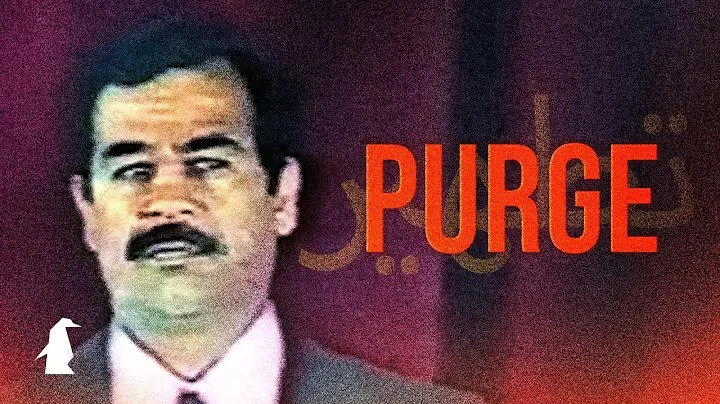
the thumbnail does three things in under 1 second.
1. one-word title text creating instant intrigue. "PURGE" explains nothing and implies violence, power, fear, and secrecy. the viewer's brain fills in the blanks before they've even read the video title. this is a textbook curiosity gap at the packaging level.
2. saddam hussein smoking a cuban cigar. the body language is calm and confident. this is a man about to do something terrible and he looks relaxed about the coming act. the contrast between the violence implied by "PURGE" and the calm in his posture creates cognitive dissonance, and the viewer needs to resolve the gap.
3. the VHS grain and red colour grading. the aesthetic signals "historical footage you weren't supposed to see," triggering the forbidden knowledge response. the viewer feels like they're about to watch something classified.
every element of this thumbnail works because it opens a curiosity gap without resolving it. the viewer clicks because they NEED to know, well before they know what the video is about.
the opening 42 seconds: a hook masterclass
the script opens with:
"we are now in iraq, july 1979. in a local theater hall, the new president has called his fellow party members to a meeting. no one knew why this meeting was called, since it wasn't a scheduled one."
in 3 sentences, the script establishes location and time period (context), a meeting called by a new president (authority figure), nobody knowing why (curiosity gap), and the unscheduled nature of it (something is wrong).
this is hook architecture #5 from my framework: the "what happened next" cliffhanger. the script drops the viewer into the moment of tension, with no backstory, no history of iraq, and no saddam biography, only the MOMENT.
then the script escalates immediately:
"the worry grew when party members saw intelligence agents surrounding the hall, walking in and watching everyone."
this single line does three things simultaneously. it raises the stakes (intelligence agents = danger), introduces a physical threat (surrounding the hall = no escape), and shifts the viewer's emotional state from curiosity to dread.
within 15 seconds, the viewer feels trapped in the room with the party members, blind to what's about to happen, certain something terrible is coming. the gap between knowing something bad is coming and not knowing what is the strongest retention mechanism in long-form content.
the script holds this tension for the full opening 42 seconds while every question stays open. who is the new president? why was the meeting called? what are the intelligence agents there for? what happened to the people in the room? 4 open loops in 42 seconds, every single one demanding resolution. the viewer is psychologically incapable of leaving.
the name reveal: controlled information release
notice how the script withholds saddam's name until the perfect moment.
the first 30 seconds describe "the new president" without naming him. the viewer who clicked on the thumbnail already knows who he is. the script knows they know, but withholds the name anyway.
why?
because the name reveal becomes a micro-payoff. when the script finally says "his name is saddam hussein," the viewer gets a hit of confirmation. their prediction was correct, and the script rewarded them for paying attention.
this is a principle i call controlled information release. you feed the viewer one piece at a time, making each piece feel earned, rather than dumping everything at once.
9 out of 10 faceless creators do the inverse. they front-load all the context: "today we're going to talk about saddam hussein, who was the president of iraq from 1979 to 2003, and in this video we're going to cover his infamous party purge."
the version above answers every question in the first sentence. the discovery is gone. the viewer holds the full picture and walks.
the outlier script withholds every answer for 30 seconds and makes the viewer earn every piece of context by staying.
the false confession: nested tension loops
the middle section of this script is where most faceless videos die. the hook energy fades, the pacing flattens, and the viewer drifts away around the 2-3 minute mark.
this script ESCALATES instead.
at the 2:53 mark, saddam calls a man to the stage. his name is muhyi abdul hussein al-shammari. he walks to the front of the hall and delivers a public confession of conspiring against the government.
the viewer thinks they understand what's happening: a traitor is being exposed.
but the script immediately plants a new tension loop: "every name he mentioned was taken out of the hall, with no one knowing where they were being led."
now the viewer is tracking two things simultaneously: the confession on stage, AND the unknown fate of the people being removed. dual tension loops running in parallel.
then the script detonates a THIRD loop:
"but all of this was nothing but a lie."
7 words, and the entire narrative inverts.
the viewer thought they understood the scene. the confession read as real, the purge read as justified (in the context of the story), and 1 line reframes everything they've been watching for the past 4 minutes.
this is nested tension loop architecture. loop 1 (what happens in the hall) contains loop 2 (the confession's true nature), which contains loop 3 (the backstory of the power struggle). each layer peels back to reveal something outside the viewer's prediction.
based on how viewers behave on scripts structured this way, retention at this point should be CLIMBING rather than declining (the documented retention curve on this specific video isn't public, so this is inferred from the pattern rather than measured on this upload). the viewer is now more engaged than at the hook, because the script has been compounding tension rather than releasing it.
the backstory reveal: earning context through tension
9 out of 10 scriptwriters would have started the video here: the backstory of saddam's rise to power, the political dynamics between him and president al-bakr, the whispered conversation where muhyi told al-bakr "don't step down."
a weak script drops all this at the beginning. "to understand what happened in 1979, we need to go back to..."
this script puts the backstory at the 4:30 mark, AFTER the viewer has witnessed the purge, AFTER the false confession, AFTER the narrative inversion.
the backstory now functions as context earned through tension rather than setup. the viewer has been watching events they only half understand for 4 minutes, so every piece of backstory lands like a revelation rather than an info-dump.
this principle transfers DIRECTLY to every other faceless niche, including finance, tech, science, history, conspiracy, and educational content. the backstory is always more engaging when the viewer has already witnessed the consequence of what you're about to explain.
show the explosion. then explain the chemistry.
the reverse order (explain the chemistry, then show the explosion) is the standard approach, and the standard approach is why 9 out of 10 faceless videos lose 40-60% of their audience in the first 2 minutes.
the emotional spike: forced complicity
the strongest retention beat in this entire script comes at the 5:30 mark.
"he was told that if he didn't obey, he would be forced to watch his wife and daughters being raped in front of him by saddam's soldiers. with no choice left, he had to comply to save his family."
this is an emotional spike. the script shifts from political intrigue to personal horror. the viewer's engagement was driven by curiosity up to this point, and now it's driven by empathy and outrage.
the shift is deliberate. the script has been building intellectual tension (what's happening, why, what comes next) for 5 minutes. the emotional spike resets the viewer's engagement on a completely different frequency.
after this beat, the viewer keeps watching because they're emotionally invested in the people in the room, well past wanting to know what happened. this is a fundamentally different type of retention, and it's almost impossible to disengage from.
the principle: intellectual curiosity has a ceiling, while emotional investment runs open-ended. the best long-form scripts transition from curiosity-driven retention to emotion-driven retention somewhere in the middle third.
this video does the switch at the exact point where curiosity-driven retention would naturally start to decline.
the rolling purge: momentum through escalation
after the emotional spike, the script enters what i call a "rolling escalation" phase.
"then he began calling the names of the traitors."
the viewer expects a quick resolution: a few names, a dramatic moment, done.
the script extends the tension instead.
"despite their fear, those whose names were called obeyed the orders. but one man appeared visibly confused. when his name was called, he shouted in shock, 'i haven't done anything.' saddam didn't even look at him."
the individual reaction breaks the pattern. up to this point, people have been complying silently. one man resisting creates a new micro-tension: what happens to the person who objects?
the answer is chilling: "the man lowered his head, submitted, and left the hall weighed down with fear."
resistance changed nothing, being acknowledged and crushed in 2 sentences. the viewer's hope (someone will fight back) was raised and destroyed in 10 seconds.
this is retention engineering at an elite level. the script creates hope, destroys hope, and makes the viewer feel the helplessness of the people in the room, all within a few lines.
then the final number: "saddam continued calling names until he had read 68."
68 people. the scale of the purge lands AFTER the emotional weight of the individual stories. if the script had opened with "68 people were purged," the number would land abstract. after watching individuals resist, comply, cry, and submit, sixty-eight feels devastating.
the order of information changes the emotional impact of the information. this is the single most transferable principle from this breakdown.
the closing: symbolic payoff
the script closes with the aftermath: executions, military trials, and party leaders forced to execute their own colleagues. the final detail lands last: "the 1979 cult hall meeting was never allowed to be discussed or made public in iraq. the recording was shared only with the party's top leaders under strict orders to keep it secret. it did not become available to the public until the US invasion and occupation of iraq in 2003."
this closing does something subtle and precise. it tells the viewer: "what you've been watching was classified for 24 years."
the viewer started the video clicking on a curiosity gap. they end the video feeling like they've seen something they weren't supposed to see. the forbidden knowledge response the thumbnail triggered is now CONFIRMED by the script's final lines.
the opening and closing form a circle. the thumbnail promised forbidden knowledge, the hook dropped the viewer into a tense room with no context, the script built escalating tension through nested loops, emotional spikes, and controlled information release, and the closing confirmed the viewer's instinct was right: this was footage the world wasn't supposed to see.
the circular payoff is why viewers rate this video highly on youtube's satisfaction surveys. the promise was made, earned, and delivered, with zero grand payoff betrayal and zero bait-and-switch. the script was honest about what it was offering, and delivered MORE than the viewer expected.
the frameworks at work
let me map this video against the audit framework i use across 8,000+ scripts:
- hook integrity: flawless. the hook drops the viewer into the moment of tension. identity of the president is withheld as a micro-payoff. 4 open loops established in 42 seconds. this is a textbook "what happened next" cliffhanger architecture.
- pacing architecture: escalating throughout. no energy drops in the middle. the emotional spike at 5:30 resets engagement. the rolling purge sequence maintains momentum through the final third.
- curiosity gap chain: continuous. at no point in the script does the viewer have zero open loops. the nested loop structure (confession, lie reveal, backstory, purge) keeps multiple threads active simultaneously.
- payoff design: circular. the closing lines deliver the thumbnail promise. the grand payoff (the classified nature of the footage) connects directly back to the forbidden knowledge hook.
- visual scripting: the script is inherently visual (a room, a stage, a cigar, men being led away). every line paints a scene the editor produces without interpretation.
- authenticity: the writing is human. zero parallel stacks, zero false contrasts, and the voice is consistent and authoritative throughout.
this video scores 90+ on every dimension of the audit. worth being honest about the logic here: the audit framework was extracted from patterns like the ones this video uses, so a high score here confirms the pattern held for this outlier rather than proving the framework independently predicts hits. the harder test, and the one we run internally on client channels, is applying the audit to a script before publication and watching what the retention curve does. that's where the predictive weight lives. the breakdown above shows you what the pattern looks like in the wild so you know what to build toward, and why 1.9M+ views in a niche where nearly every video struggle to break 50K wasn't an accident.
what this means for YOUR channel
these principles apply well outside true crime content.
controlled information release works in finance ("the company lost $4B... but the real story is how"), emotional spikes land equally hard in tech ("this decision affected 50,000 employees and their families"), and educational content gets the same lift from nested tension loops ("the obvious explanation collapses, and the real explanation is worse").
the frameworks are universal, while the content is specific.
i've applied these exact principles across 50+ niches and 8,000+ scripts. the retention patterns hold everywhere, with the subject matter being the only variable.
the newsletter covers more of these outlier breakdowns every week: fyreinteractive(.co/newsletter)
if you want me to audit your faceless youtube channel and show you how i'd implement these exact retention frameworks using pattern data from 8,000+ scripts across 50+ niches, DM me "SCRIPTS" and i'll show you how the system works
(200M+ views generated through AI scriptwriting skill files trained on 8,000+ scripts, 1-time payment)
haris
keep reading
Put this into every script you write
FacelessOS is 22 skill files built from 8,000+ scripts across 50+ niches. It works with any AI. 300+ creators are using it. $699 one-time for Files, $1,199 for FacelessOS+. No subscription.
Get FacelessOS