youtube changed how it ranks videos in 2026 and almost nobody noticed.
the creators who caught it are printing. the ones who missed it are wondering why their impressions flatlined after three weeks of "consistent uploads."
i'll explain exactly what changed, why it makes scripts the single most important asset on the platform, and how 200M+ views worth of data proves it.
the algorithm is ignoring you far more than it's punishing you
youtube rolled out a Browse feed overhaul in february 2026. the system shifted from matching videos to broad topic categories to mapping them against individual viewer watch history clusters.
in plain english: youtube stopped saying "this person likes true crime" and started saying "this person likes this specific type of true crime, watched at this time, in this format."
the recommendation engine got personal. and the consequence is brutal.
YouTube doesn't care about generic categories anymore. It maps videos directly to hyper-specific behavioral clusters. If your video can't beat the other channels already in a user's daily rotation, the algorithm simply skips your content and moves to the next option in their cluster.
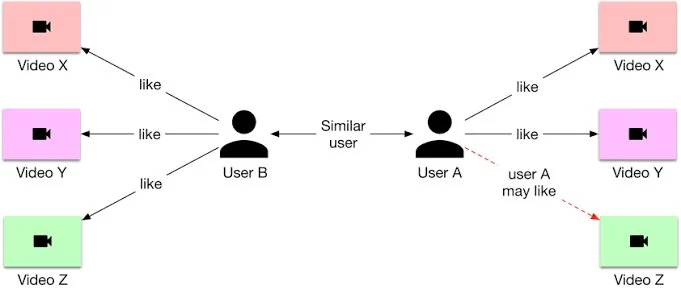
YouTube doesn't care about generic categories anymore. It maps videos directly to hyper-specific behavioral clusters. If your video can't beat the other channels already in a user's daily rotation, the algorithm simply skips your content and moves to the next option in their cluster.
your video now competes against every video in that specific viewer's behavioural pattern, well beyond the other videos in your niche. their favourite podcast clips. their go-to documentary channels. the video essay they rewatch every month.
and your video wins inside that pattern on one condition: the viewer stays satisfied longer than with the alternatives.
satisfaction replaced watch time, and 9 out of 10 creators kept working the old way
this is the part that cooked 90% of faceless creators in 2026.
youtube confirmed that viewer satisfaction surveys now carry more weight than raw watch time. a 3-minute video a viewer loved, rated highly, shared, and came back to will outrank a 20-minute video they tolerated and left halfway through.
the old approach was: make it longer, pad the runtime, squeeze out extra minutes.
the current approach is: make every second so good the viewer rates you 5 stars and watches another video on your channel right after.
youtube's Todd Beaupre, their Director of Growth and Discovery, put it in writing. the formula is now watch time multiplied by satisfaction signals (surveys, return visits, session continuation).
shorter videos with high retention are beating longer videos with low retention.
and here's the part that connects everything to scripts.
your retention lives and dies inside 30 seconds
the 2026 algorithm elevated first-30-second retention to a core ranking input.
a standalone metric that youtube feeds directly into the ranking formula before anything else about your video gets evaluated, well past "nice-to-have" or "best practice" status.
under the old model, the first 30 seconds mattered because they predicted whether someone would stick around for the rest.
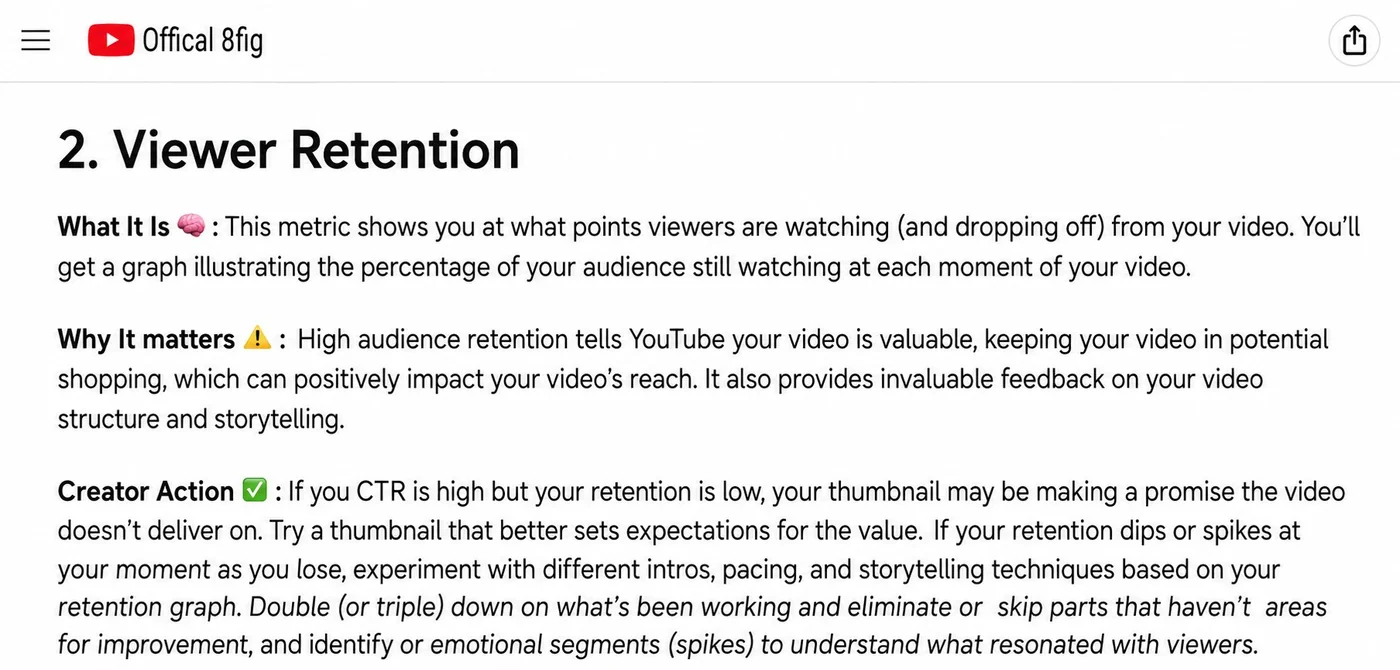
under the new model, they matter because they're the strongest predictor of whether a viewer will complete, share, and rate positively. the 30-second window now determines your entire distribution curve before the video even gets to the midpoint.
and what controls the first 30 seconds of a youtube video?
the thumbnail gets the click. the editing supports what's being said. the music fills gaps between words.
the script. the words. the hook. the promise. the pacing of information in those opening lines.
85% retention at the 0:30 mark versus 38%. one niche, one editor, one upload schedule. the only variable was the script.
that's data from channels in our network running the same framework. the difference between a video that dies at 2,000 views and one that pushes past 100K is almost ALWAYS traceable back to what was written far more than what was edited.
the session contribution trap
here's where it gets even more specific.
youtube now tracks session contribution: whether your video caused the viewer to watch more youtube or close the app.
videos that extend sessions get exponentially more suggested placements. videos that end sessions get buried.
and session contribution is a script problem.
a strong outro drives the viewer to another video on your channel. a well-placed internal curiosity loop makes them search for the next piece of the story. a payoff structure that resolves one question while opening another keeps the session alive.
editing gives you none of this. SEO gives you none of it. all of it comes from the structural architecture of the script.
playlists and series formats are outperforming single-shot uploads precisely because of this. the script chains one video to the next through narrative rather than suggested algorithm tricks.
i've written 8,000+ scripts across 50+ niches. and the single biggest predictor of a channel breaking through in 2026 is whether the scriptwriter understood that youtube's algorithm now rewards psychological engagement far more than production value.
why 9 out of 10 creators are solving the wrong problem
the faceless youtube space right now is obsessed with three things: thumbnails, niches, and upload frequency.
all three matter, and all three matter less than creators think.
here's why.
thumbnails increase CTR. a better thumbnail gets more people to click. but youtube's 2026 algorithm actively punishes high CTR paired with low retention. clickbait titles and misleading thumbnails inflate clicks briefly, then destroy retention in the first 30 seconds. and that second signal carries MORE weight than low CTR alone.
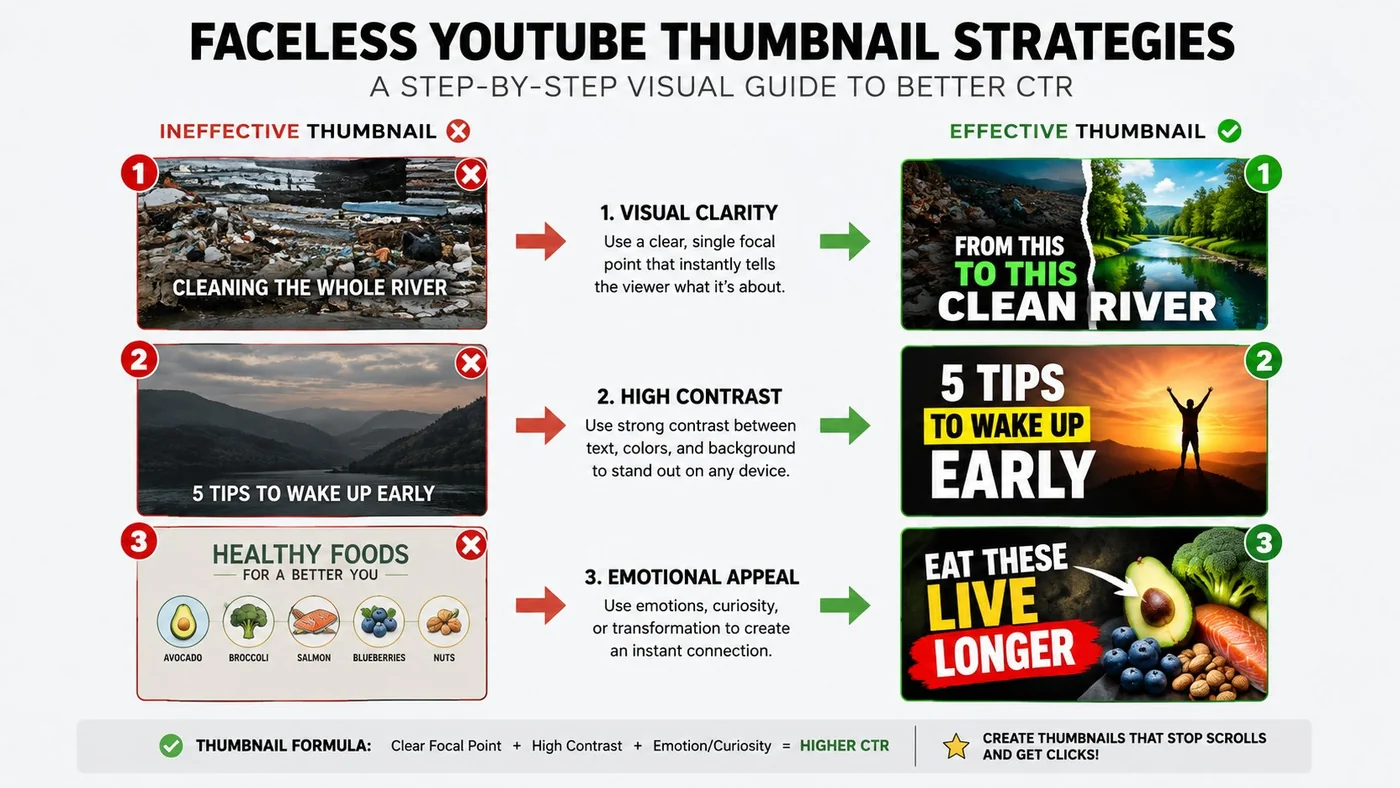
so a great thumbnail with a bad script is worse than a mediocre thumbnail with a great script.
niche selection matters at the beginning. but once you're in a niche, the differentiator between channels is content quality. and content quality on a faceless channel is the script. zero face, zero personal brand. you have words, visuals, and pacing. two of those three are determined by the script.
upload frequency helps when the content is good. but youtube's shorts and long-form algorithms were formally separated in 2026. posting more shorts doesn't help your long-form reach. and posting more long-form videos with scripts that lose viewers in 30 seconds trains the algorithm to show your content to fewer people each time.
frequency with weak scripts is a negative compounding loop. you're literally teaching youtube that your content disappoints viewers.
the looksmaxxing parallel
think about it like this.
in the looksmaxxing world, people spend thousands on skincare routines, haircuts, wardrobes, accessories. if the bone structure underneath is weak, that surface work stays cosmetic. the foundation determines the ceiling.
scripts are the bone structure of a youtube video.
you're layering editing, music, b-roll, transitions, effects, and AI voiceover on top of a script that loses people at second 12. all that production shine is expensive skincare on weak bone structure.
the channels hitting 863K views from a single script, 490K views from a single upload, $50K from a single webinar recording... they won on scripts built on retention patterns extracted from thousands of proven videos, with ordinary editing budgets.
what the data says about 2026 retention benchmarks
since we're talking specifics:
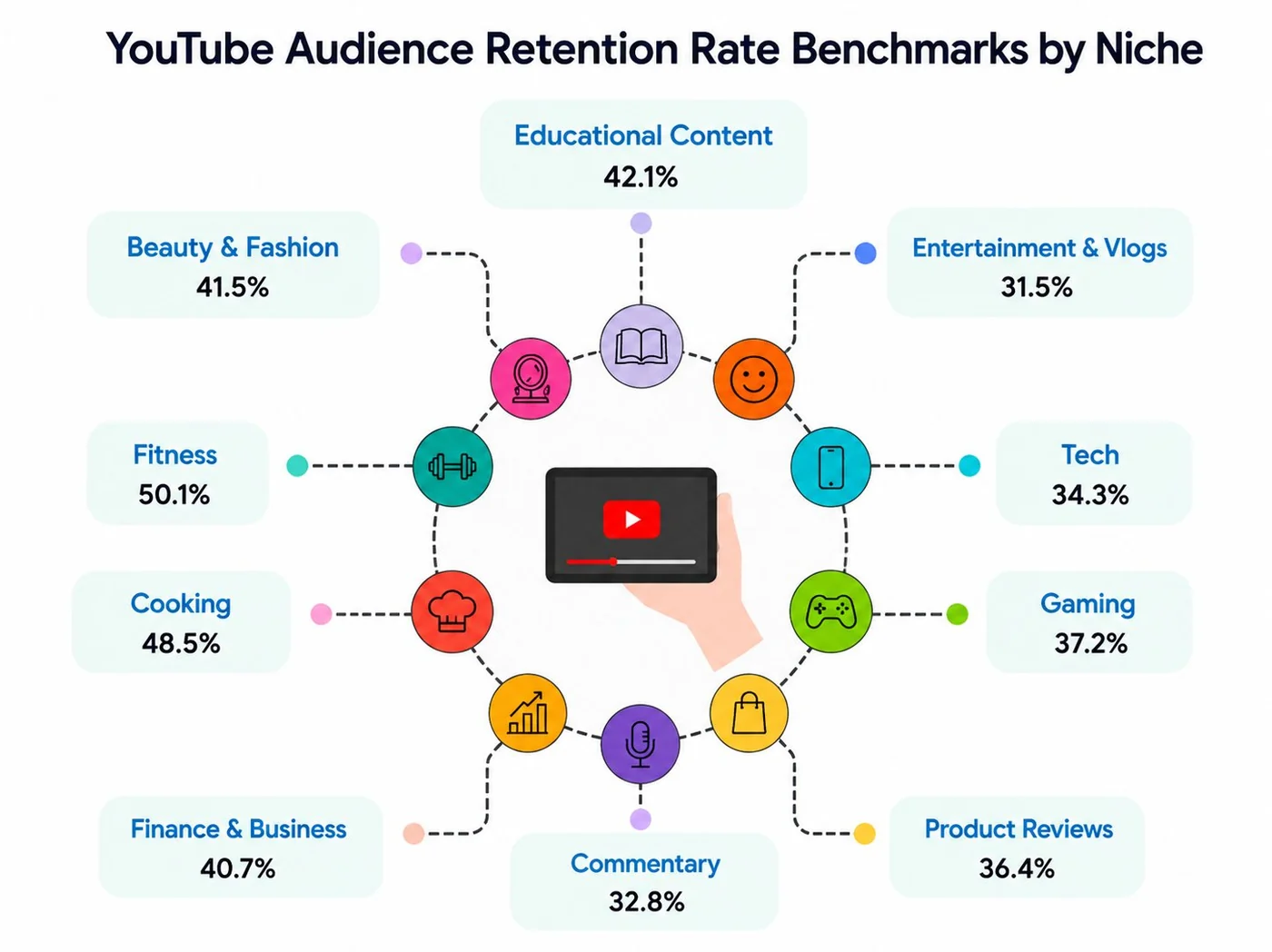
- for videos under 5 minutes, a good average view duration is 50-70% retention
- for 10-20 minute videos, 40-55% is strong
- anything below 30% retention signals a hook or pacing problem directly to the algorithm
and here's the kicker: youtube's natural language processing now indexes your spoken content through auto-captions. the words in your script are being read by the algorithm. semantic meaning drives topical alignment far more than keyword matching.
your script is now both the viewer-facing product AND the algorithm-facing signal. the words you write determine whether viewers stay, AND whether youtube understands what your video is about well enough to recommend it.
this is why i keep saying the script is the foundation. the editing, the thumbnails, the SEO, the upload schedule... all of it sits on top of whatever the script gives them to work with.
the algorithm shift the space keeps skipping
9 out of 10 youtube educators are still teaching a 2024 approach. optimise your thumbnails. find an untapped niche. post three times a week. split test your titles.
all of it is surface-level optimisation on a platform that fundamentally changed how it evaluates content.
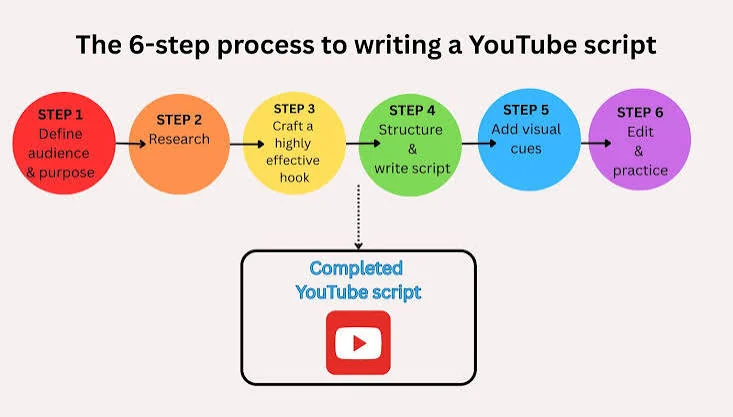
youtube in 2026 rewards satisfaction. satisfaction comes from retention. retention comes from script structure. script structure comes from understanding four things: hook psychology, curiosity gap architecture, pacing mechanics, and payoff design.
i spent years extracting these patterns across 8,000+ scripts and 50+ niches. 200M+ views worth of data. and every single pattern leads back to the same conclusion.
the algorithm is a mirror. it reflects what the viewer does. and what the viewer does is determined by what the script makes them feel.
if the script creates doubt in the first 15 seconds, the viewer leaves, retention drops, satisfaction tanks, and the algorithm stops showing the video. that chain reaction starts and ends with the words on screen.
if the script confirms the promise in 8 seconds, chains curiosity gaps through the middle, and delivers a payoff that makes the viewer want more, retention holds, satisfaction scores rise, session contribution goes up, and the algorithm pushes the video to a bigger audience.
one editor, one niche, one upload day. change the script and the outcome changes completely.
if you're sitting here wondering why your videos plateau at 2K views despite "doing everything right," this is your answer. the algorithm changed. ranking is now satisfaction-first. and satisfaction starts and ends with the script.
if you want to see how we'd rebuild your scripts using retention patterns from 8,000+ proven scripts across 50+ niches, DM me "SCRIPTS" and i'll walk you through it.
where this leaves the faceless space
the creators who figured this out in early 2026 are compounding right now.
one channel in our network went from averaging 4K views to hitting 100K+ on a single video. one niche, one format, one editor. the scripts got rebuilt on retention data from 8,000+ proven scripts and the channel stopped hemorrhaging viewers in the first 30 seconds.
another channel monetised from a single video. 490K+ views. the script held viewers through a 10-minute true crime documentary with a retention curve that looked like a straight line rather than a cliff.
these are the expected outcome when the script matches what the 2026 algorithm is optimised to reward.
the gap between channels that understand this and the rest is going to widen FAST. youtube's personalisation engine is getting more aggressive. viewer satisfaction signals are getting more granular. and the first 30 seconds are becoming an even more decisive filter.
every month you spend optimising everything except your scripts is a month your channel spends training youtube to suppress your content.
the fix has never moved.
the words.
if you want me to audit your faceless youtube channel and show you how i'd implement this exact scriptwriting system to turn your scripts into retention machines built on 8,000+ scripts worth of pattern data, DM me "SCRIPTS" and i'll show you how it works
(200M+ views generated through AI scriptwriting skill files trained on 8,000+ scripts across 50+ niches, one-time payment)
haris
keep reading
Put this into every script you write
FacelessOS is 22 skill files built from 8,000+ scripts across 50+ niches. It works with any AI. 300+ creators are using it. $699 one-time for Files, $1,199 for FacelessOS+. No subscription.
Get FacelessOS