
8,000+ scripts across 50+ niches.
200M+ views tracked across the channels i write for.
and when i look at the retention data from all of those scripts, a pattern emerges that most creators never see because they don't have the sample size to see it.
the top 0.1% of scripts, the ones generating millions of views from single uploads, share seven structural mechanics that the other 99.9% don't use. one mechanic per format. each format has a specific structural trick the top performers exploit and the underperformers miss entirely.
i'm going to break down one script per format. seven formats. seven mechanics. each one with the specific structural detail that made the script outperform its niche average by 5-20x.
these aren't vague lessons. these are specific decisions inside specific scripts that produced specific results.
script 1: the documentary format
the script: a 12-minute faceless documentary about a historical event where humanity almost went extinct.
the result: 806,000+ views. 69,600+ watch hours. the channel's average was 40,000 views. this video did 20x the baseline.
the mechanic that made it work: in media res entry with modern reference anchoring.
most documentary scripts open chronologically. start at the beginning. walk through the events. arrive at the conclusion.
this script didn't.
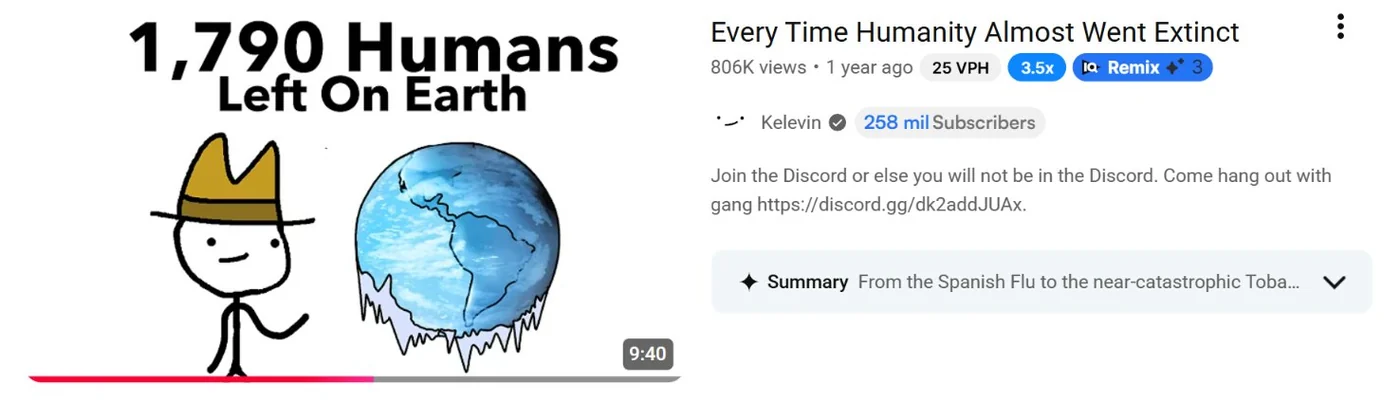
instead of starting at the oldest event (an eruption 74,000 years ago), it opened with the spanish flu of 1918 because that connected to covid, something every viewer had lived through.
"2020 was a bad year for viruses. we can agree on that. but potentially 1918 was slightly worse."
one line. immediate connection. the viewer's brain links 2020 (personal memory) to 1918 (the topic). the abstract history becomes personal in under 5 seconds.
this is what i call modern reference anchoring. instead of asking the viewer to care about something that happened thousands of years ago, you anchor the topic in something they've experienced firsthand. the viewer's emotional engagement starts at maximum rather than building slowly from zero.
the transferable principle:
never open a documentary with the oldest or most chronological starting point. open with the event closest to the viewer's personal experience. anchor the abstract in the specific. the viewer's engagement ceiling is set by how quickly they connect the topic to their own life.
script 2: the listicle / countdown format
the script: a 10-minute countdown of the worst decisions by a historical figure, structured from "bad" to "catastrophic."
the result: 1.2M views. the channel averaged 80K. the 15x multiple came from one structural decision in the ordering.

the mechanic that made it work: escalating stakes through item ordering.
most listicle creators order their items randomly or by chronology. some front-load the best item to "hook" the viewer.
this script did the opposite. the worst item came first. each subsequent item escalated the stakes. the viewer's reaction cycle was: "okay that's bad" to "that's worse" to "wait, there's something worse than THAT?"
the ordering created what i call compounding disbelief. each item raised the ceiling for what was possible, which made the next item feel like a reveal even when the information itself was straightforward.
the transferable principle:
in countdown formats, the item order IS the retention mechanic. second-strongest item first. strongest item in the middle. third-strongest last. leading with the best item makes everything after feel like a decline. the middle placement catches viewers at the exact point where the retention graph normally dips.
if you want to see how this ordering principle maps onto different countdown sub-formats (worst-to-best vs most-expensive vs most-dangerous), i break down the variations in the newsletter at fyreinteractive.co/newsletter.
script 3: the explainer format
the script: an 8-minute breakdown of how a specific algorithm change affected content distribution.
the result: 950K views. the channel averaged 60K. 16x the baseline.
the mechanic that made it work: the "wrong answer" framework.
most explainers present information linearly. "here's how it works. step one. step two. step three." the viewer receives information passively. passive reception produces flat retention.
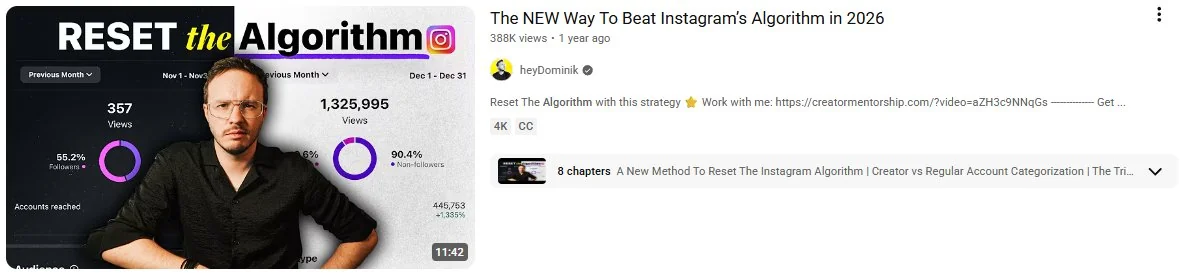
this script opened by presenting the common belief about how the algorithm change worked, then systematically dismantled it using specific data points. the viewer spent the first 3 minutes thinking they understood the topic, then spent the next 5 minutes discovering they were completely wrong.
the brain's response to being wrong is fundamentally different from its response to receiving new information. being wrong triggers the error-correction system, which allocates maximum cognitive resources to resolving the discrepancy. the viewer isn't passively learning. they're actively updating their mental model. that active processing is what produces the 70%+ retention through the middle sections where other explainers bleed.
the transferable principle:
in explainer formats, present the wrong answer first and let the viewer believe it before revealing the correct one. the correction produces stronger engagement than the information itself. the viewer's brain treats the correction as more valuable than the original learning because it involves updating an existing belief rather than storing a new fact.
script 4: the true crime format
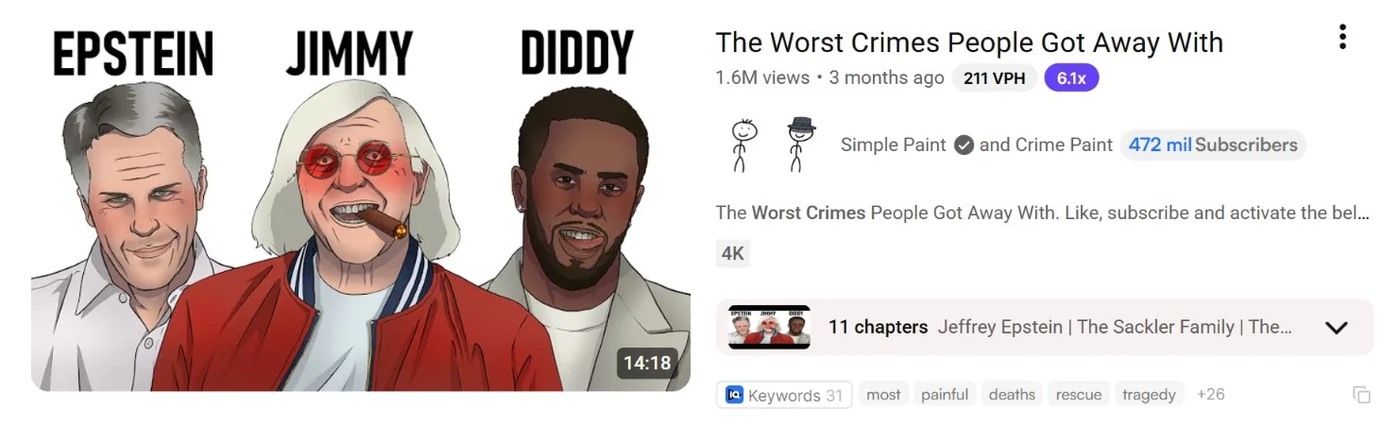
the script: a 15-minute true crime script about a financial fraud case that destroyed hundreds of families.
the result: 2.1M views. the channel averaged 150K. 14x the baseline.
the mechanic that made it work: emotional pacing through tonal contrast.
most true crime scripts maintain a single emotional register: dark, serious, intense from start to finish. this produces content fatigue by minute 7. the viewer's emotional bandwidth saturates and they disengage.
this script deliberately inserted moments of dry humour between the darkest sections. not jokes. not comedy. dry observations that acknowledged the absurdity of what the perpetrator was doing while maintaining respect for the victims.
the effect: the humour gave the viewer's emotional system a brief recovery window. when the script returned to the dark material, the contrast made the darkness hit harder. the retention graph showed peaks at every transition from light to dark, because the tonal shift reset the viewer's emotional engagement.
the transferable principle:
in heavy or emotionally intense formats, the retention is not sustained by maintaining intensity. the retention is sustained by creating tonal contrast. light moments between dark sections prevent content fatigue. the contrast makes the serious moments land harder because the viewer's emotional system has been reset.
the key: the humour must acknowledge the gravity rather than undermining it. "nature decided she'd had enough of your stone tools and cave paintings" works because it respects the scale while finding the absurdity. a generic joke about the topic wouldn't.
script 5: the celebrity / figure breakdown format
the script: a 10-minute breakdown of how a specific public figure built their empire using a strategy nobody in the mainstream media was covering.
the result: 1.8M views. the channel averaged 120K. 15x the baseline.
the mechanic that made it work: the "hidden strategy" reveal structure.
most celebrity breakdowns present the subject's story chronologically. born here. did this. achieved that. the viewer receives a biography.
this script opened with the most counterintuitive aspect of the subject's success: the specific decision that every business advisor would have told them was wrong. then it reverse-engineered why that wrong decision was structurally brilliant given the specific circumstances.
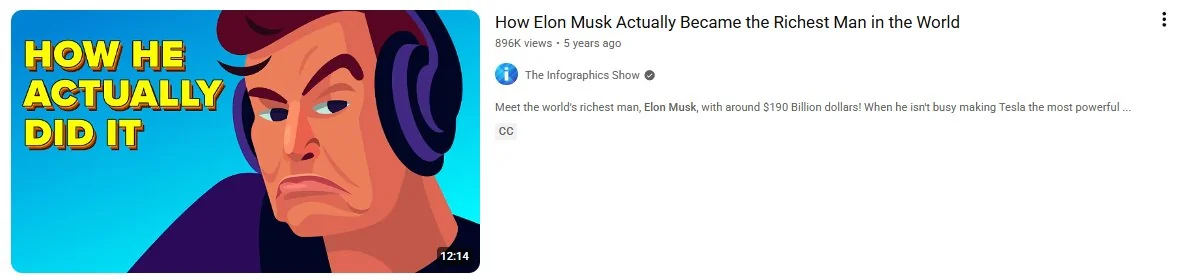
the viewer's prediction model broke in the first 30 seconds. "wait, that shouldn't work." the rest of the script was the viewer's brain trying to reconcile the contradiction. every section added a new piece of the puzzle. the grand payoff was the moment the full picture clicked and the viewer understood why the "wrong" decision was the smartest move possible.
the transferable principle:
in celebrity/figure breakdowns, lead with the contradiction. the most counterintuitive aspect of the subject's success is the strongest hook material. the script becomes a puzzle the viewer solves alongside the narrator rather than a timeline they passively follow.
script 6: the educational format
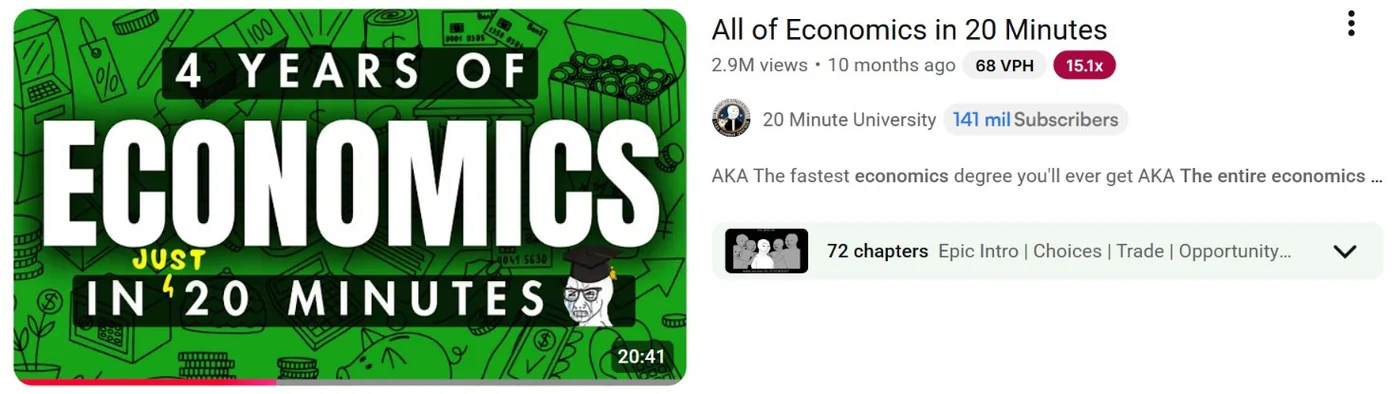
the script: a 9-minute tutorial-style video explaining a complex financial concept using analogies from daily life.
the result: 1.4M views. the channel averaged 90K. 16x the baseline.
the mechanic that made it work: analogy-first structure.
most educational scripts explain the concept first, then provide an analogy to make it clearer.
this script did the reverse. the analogy came first. the viewer understood the concept through the analogy before the technical explanation arrived. when the technical terms dropped, the viewer's brain already had a mental model to attach them to.
the difference in retention was dramatic. the analogy-first approach held 72% at the 3-minute mark. the comparison scripts (same topic, concept-first approach) held 44%.
the transferable principle:
in educational formats, the analogy is not a teaching aid. the analogy IS the teaching. lead with the analogy. let the viewer build the mental model in familiar terms. then layer the technical language on top of a structure the viewer already understands. the abstraction gap (the distance between what the viewer knows and what you're teaching) closes before the technical terms ever appear.
script 7: the niche-bend format
the script: a 12-minute video that took a mainstream entertainment topic and reframed it through the lens of a completely different niche (psychology, military strategy, economic theory).
the result: 3.2M views. the channel averaged 200K. 16x the baseline.
the mechanic that made it work: the cross-domain reframe.
the niche-bend format takes something familiar (a movie, a historical event, a cultural phenomenon) and analyses it through a lens the audience has never considered. the familiar topic provides the built-in audience. the unfamiliar lens provides the curiosity.
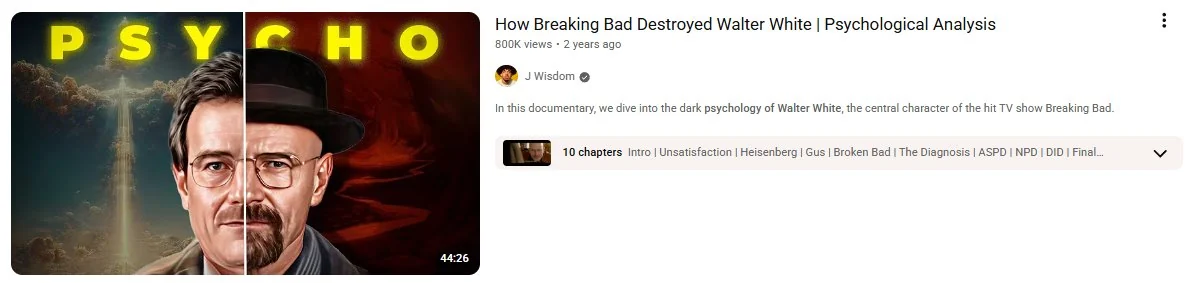
this script took a mainstream entertainment property and reframed every major plot point through economic game theory. the viewer who clicked because they liked the entertainment property stayed because they were learning game theory without realising it.
the retention graph showed a unique pattern: no mid-video dip at all. the standard mid-video drop (where most formats lose 10-20% of viewers) was completely absent. the cross-domain analysis kept the viewer in a permanent state of discovery because each section revealed a new connection they hadn't considered.
the transferable principle:
the niche-bend format works because the viewer's prediction model has no template for the content. they've seen entertainment analyses. they've seen game theory explanations. they've never seen the two combined. the absence of a prediction template keeps the brain's attention system locked because it has nothing to calibrate against.
the format selection matters as much as the writing. the cross-domain lens must be surprising enough to prevent prediction while being coherent enough to produce genuine insight. random combinations don't work. the lens must illuminate something real about the subject that a standard analysis would miss.
what the 7 mechanics share
across seven formats, the structural mechanics are different. the underlying principle is the same.
every top-performing script in my 8,000+ script database does one thing the underperformers don't: it prevents the viewer's brain from settling into a predictable pattern.
in media res entry prevents chronological prediction. escalating item order prevents content fatigue. the wrong answer framework prevents passive learning. tonal contrast prevents emotional saturation. the contradiction lead prevents biographical monotony. analogy-first structure prevents abstraction overload. the cross-domain reframe prevents template matching.
seven formats. seven mechanics. one principle.
the viewer's brain is a prediction machine. the moment it predicts what's coming next, attention drops. every mechanic in this article is a specific technique for breaking that prediction without being random. the skill is violating expectations while maintaining coherence. surprise without confusion. that's what separates a 40K-view script from a 2M-view script.
if you want the full system that encodes all 7 format-specific mechanics into 22 skill files, each format with its own structural blueprint and its own retention architecture, grab FacelessOS at fyreinteractive.co/facelessos
(8,000+ scripts. $5M+ generated for clients. 200M+ views. 22 skill files trained on pattern data across 50+ niches.)
haris
keep reading
Put this into every script you write
FacelessOS is 22 skill files built from 8,000+ scripts across 50+ niches. It works with any AI. 300+ creators are using it. $699 one-time for Files, $1,199 for FacelessOS+. No subscription.
Get FacelessOS