i've audited over 200 faceless youtube scripts in the last 12 months.
finance channels. true crime channels. explainer channels. documentary channels. channels doing 500K views per month with $1,200 in revenue. channels doing 3,000 views per month wondering if the niche is "too saturated."
the diagnosis is the same in 95% of cases.
the creator thinks the problem is the niche, the algorithm, the thumbnail, the upload frequency, the AI voice, or the editing. they've tried switching all of those. nothing moved.
because none of those were the problem.
the problem was always the script. specifically, the structural decisions made (or not made) inside the first 2,000 words of every upload. the hook architecture. the curiosity loop placement. the pacing cycle. the payoff structure. the grand payoff foreshadowing.
these are the mistakes. every single one of them shows up on the retention graph before i even read the transcript. and every single one of them has a specific fix that produces measurable results within the next 3-5 uploads.
mistake 1: wrong hook type for the format
this is the most common mistake across the 200+ scripts i've audited and the one with the most immediate impact on retention.
you've got 15-30 seconds to convey what your video is about. get the hook type wrong and a good chunk of viewers leave before the script even reaches the topic.
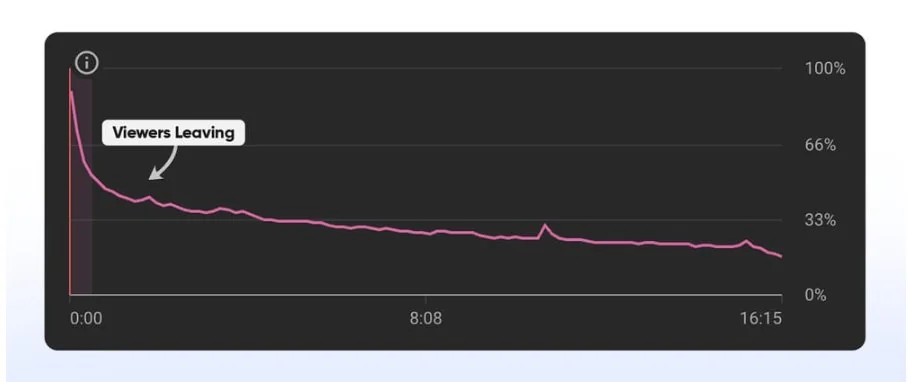
you've got 15-30 seconds to convey what your video is about. get the hook type wrong and a good chunk of viewers leave before the script even reaches the topic.
every script format has a specific hook framework. documentary scripts need character-concept-stakes hooks. educational scripts need target-transformation-stakes hooks. true crime scripts need in media res or dramatic stakes hooks.
when a creator uses an educational hook on a documentary script, the opening sounds like a sales pitch. "in this video, you're going to learn exactly how..." on a video about the fall of the roman empire.
when a creator uses a documentary hook on an educational script, the opening sounds clickbaity. "what happened next would change everything..." on a video about how to set up a youtube channel.
the mismatch creates cognitive friction in the first 8 seconds. the viewer's brain predicted one type of content from the thumbnail. the hook delivered a different type. the prediction fails. the trust check fails. 40% of viewers leave before the script even reaches the topic.
the fix:
match the hook framework to the format. document this as a decision before writing. "this is a documentary script. the hook uses character-concept-stakes: who is the story about, what is their situation, why does the outcome matter." or: "this is an educational script. the hook uses target-transformation-stakes: who is this for, what will they specifically get, what's the cost of not watching."
the format-hook match is the single highest-leverage structural decision in the entire script. getting it right doesn't require better writing. it requires making the decision consciously rather than defaulting to whatever hook style the creator used last time.
mistake 2: no confirmation in the first 15 seconds
the viewer clicked because the thumbnail and title created an expectation. the first 15 seconds is when the viewer checks whether that expectation was correct.
most creators use those 15 seconds to introduce themselves, set up context, or explain what the video is about in general terms.
"hey guys, welcome back to the channel. so today i want to talk about something i've been thinking about for a while..."
15 seconds burned. zero confirmation delivered. the viewer's brain is scanning for proof they clicked the right video. they're not getting it. the prediction model registers: unreliable. the brain starts looking for a better option.
40% of viewers leave before the 30-second mark on scripts with delayed confirmation. the retention graph shows a cliff. the creator blames the algorithm.
the fix:
the first sentence must name the viewer's situation. not the topic. the viewer's specific situation.
"if you're a faceless creator getting 400 views a video and you've switched niches three times in the last 6 months because nothing's working..."
that sentence confirms. the viewer sees themselves. the brain's prediction model fires the "i was right, this is worth my attention" signal. the dopamine hit locks attention for the next 20-30 seconds, which is enough time for the curiosity gap to open.
if you want to see how confirmation phrasing changes across niches (the phrasing for a finance audience is structurally different from the phrasing for a true crime audience), i break down the niche-specific variations in the newsletter at fyreinteractive.co/newsletter.
mistake 3: the curiosity gap is vague or missing
the curiosity gap is the information deficit the viewer feels after the hook. they know something exists that they don't know yet, and closing that gap requires watching.
most creators either skip the gap entirely (the hook confirms the topic but doesn't create tension) or make the gap too vague to trigger the response.
a vague gap: "i'm going to share something interesting about youtube scripts."
the brain registers no specific deficit. "something interesting" doesn't create cognitive discomfort. the viewer can walk away without feeling like they're missing anything specific.
a specific gap: "there's one line in the first 15 seconds of your script costing you 40% of your audience and you wrote it this morning."
the brain registers a specific, personal, urgent deficit. the viewer knows there's a specific line. they know it's costing them 40%. they know they wrote it this morning. walking away from that gap feels like choosing ignorance about a problem happening right now.
the data:
across 200+ audits, scripts with a specific curiosity gap in the first 50 words held 58% retention at the 0:30 mark. scripts with a vague or missing gap held 31%.
the fix:
the gap must contain three elements: specificity (name the exact thing), quantification (attach a number to the cost or benefit), and personal relevance (make the viewer feel it applies to their specific situation right now).
mistake 4: the payoff void
this is where the money dies. literally.
the payoff void happens when the script delivers a mini payoff (a useful insight, a key data point, a reveal) and then moves to the next section without opening a new curiosity gap.
a perfect example of the 'payoff void' in action. notice how retention takes a sharp, permanent downward dive immediately following a peak in engagement. this is what happens when you fail to open a new loop after a payoff - it destroys viewer retention.
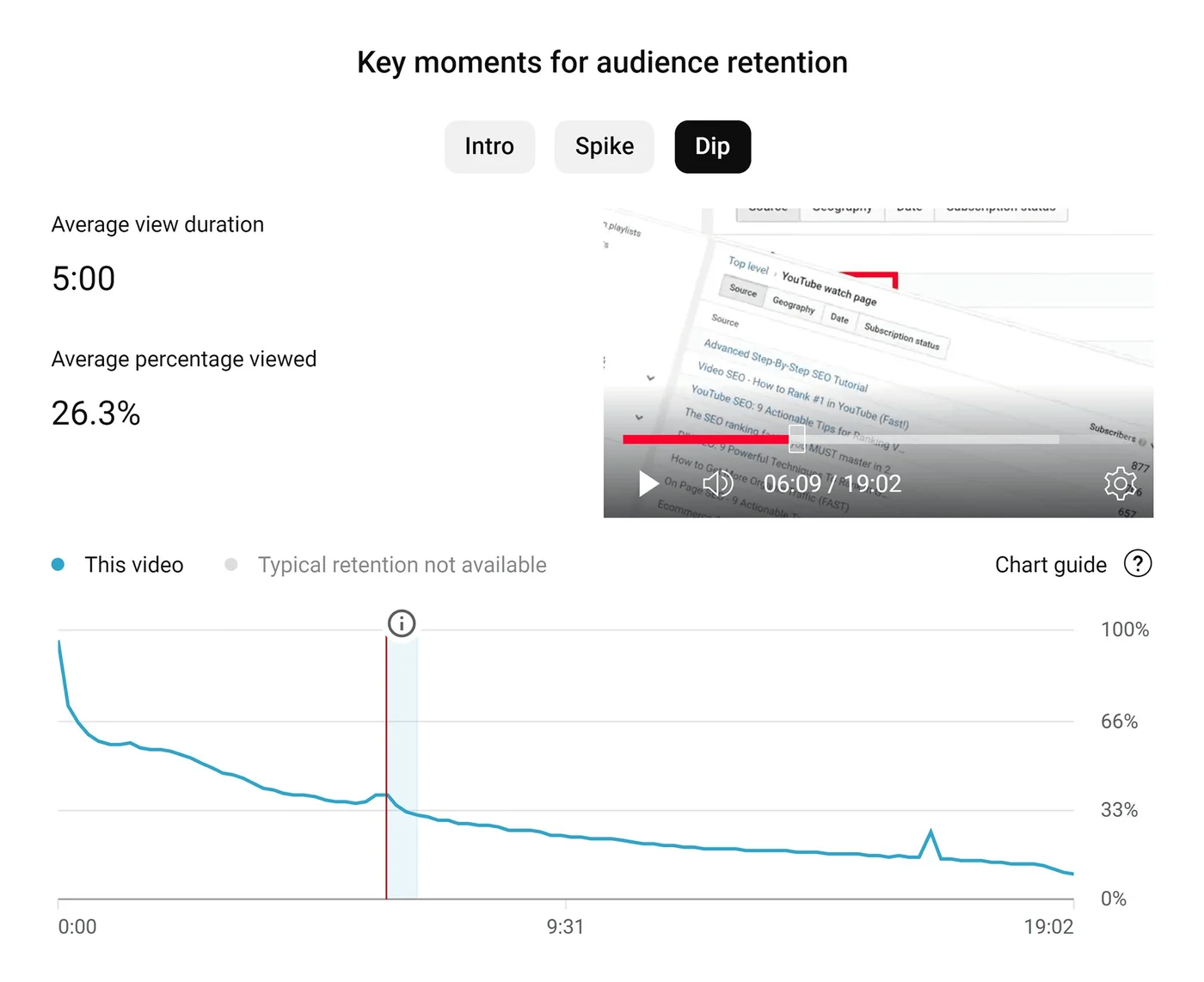
a perfect example of the 'payoff void' in action. notice how retention takes a sharp, permanent downward dive immediately following a peak in engagement. this is what happens when you fail to open a new loop after a payoff - it destroys viewer retention.
for 30-60 seconds, the viewer is in a state of completion. they got something valuable. nothing unresolved is pulling them forward. leaving feels cost-free.
this matters because youtube's mid-roll ads fire at the 30-40% and 60-70% marks of the video. for a 10-minute script, the first mid-roll sits at minute 3-4. if the payoff void hits at minute 3 (which it does in 70%+ of the scripts i audit), the viewer leaves before the ad plays.
they counted as a view. they generated zero revenue. the creator's view count looks healthy. the RPM is catastrophic.
the fix:
within 10 seconds of every mini payoff, open a new curiosity gap. "but this leads to something most creators never consider..." or "and the data from the next section contradicts everything i showed you above." the viewer can't leave because something unresolved is pulling them past the ad placement.
the rule: no payoff without a new setup within 10 seconds. no state of completion lasting longer than a single breath.
mistake 5: flat pacing through the body
the brain's attention system calibrates to rhythm. when a script maintains the same pacing for more than 90 seconds, the brain's prediction model locks onto the pattern. once the pattern is predictable, attention drops.
most scripts i audit run at a single pace: medium-density information delivery from start to finish. no compression sections. no expansion sections. no shock moments.
the retention graph shows the result: a steady, linear decline from the hook to the outro. no peaks. no valleys. a slow bleed.
the fix:
every script must cycle through three pacing modes at least twice:
- compression: dense, rapid, fact-heavy sentences. short paragraphs. the viewer is slightly overwhelmed. attention spikes.
- expansion: slower, story-driven, experiential passages. longer sentences with breathing room. the viewer processes what they absorbed.
- shock: a sudden violation of the established pattern. a surprising data point, a tonal shift, a direct challenge to something the viewer believes. this resets the brain's prediction model and snaps attention to maximum.
the cycle must complete at least twice in a 10-minute script. 90 seconds in any single mode is the maximum before calibration kicks in.
mistake 6: stakes that never escalate
in a casino, the table minimum exists so that every hand matters. a $5 minimum at a $10,000 bankroll creates no tension. a $500 minimum at a $2,000 bankroll creates tension on every hand.
most scripts i audit operate at the $5 minimum. the stakes are present but never escalate. the viewer understands the topic matters in a general sense, but never feels the tension increase as the script progresses.
the result: watch-through rates crater. the viewer who stays past the hook but leaves at minute 6 is a viewer who ran out of reasons to care. the stakes didn't escalate enough to hold them through the middle.
the fix:
stakes escalation works in three tiers:
tier 1 (hook): establish the personal stakes. "this is costing you 40% of your audience." the viewer feels the initial loss.
tier 2 (mid-body): expand the stakes. "and the 40% you're losing are the viewers who would have reached your mid-roll ads, generated revenue, and converted into subscribers. you're not losing views. you're losing your business model."
tier 3 (pre-grand-payoff): make the stakes irreversible. "every upload with this structural mistake compounds the signal to the algorithm: this channel doesn't hold viewers. after 20 uploads, the algorithm's model of your channel is set. reversing that model takes 3x the effort of building it correctly the first time."
each tier raises the table minimum. the viewer's loss aversion compounds. leaving the video before the resolution feels increasingly costly.
mistake 7: the grand payoff betrayal
the title made a promise. the script must deliver on it.
75% of the scripts i audit bury the grand payoff in the final 2 minutes of the video. by that point, 70-80% of the audience has left. they never received what they clicked for. they feel deceived. they don't return to the channel.
this is also called Narrative Debt, which is the psychological gap between your video's premise and its payoff. viewers constantly ask, "how do we get there?" leave them in darkness, and they drop off.
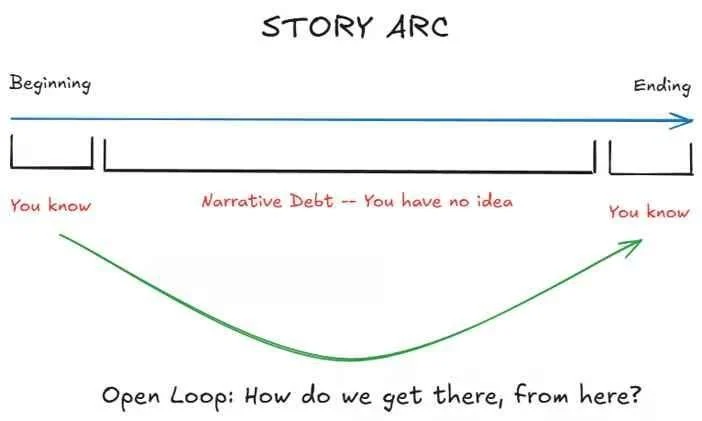
this is also called Narrative Debt, which is the psychological gap between your video's premise and its payoff. viewers constantly ask, "how do we get there?" leave them in darkness, and they drop off.
worse: the grand payoff often doesn't match the title's promise. the title promised "how i got 800K views with one script." the grand payoff explains a vague principle about "making good content." the viewer who made it to the end feels cheated. the viewer who left early never got the answer at all.
the fix:
foreshadow the grand payoff at three specific points:
- in the hook (words 1-50): hint at the payoff. "by the end of this, you'll know the exact line that's costing you 40% of your audience."
- at the 3-minute mark: remind the viewer. "we're getting closer to the specific fix. but first, you need to understand why the standard advice makes the problem worse."
- at the 8-minute mark: build anticipation. "everything i've shown you so far leads to one structural change. and it's not what you'd expect."
each foreshadowing reminds the viewer: the payoff is coming. stay with me. the viewer who's been reminded three times is significantly more likely to watch through the final sections where the payoff lives.
mistake 8: hook-title mismatch
the title creates an expectation. the hook either confirms or violates that expectation.
a mismatch happens when the title promises one frame and the hook delivers another. title: "why your faceless channel is dying." Hook: "hey everyone, so i wanted to talk about some interesting trends in youtube analytics this month."
the title frames a diagnosis. the hook frames a casual observation. the viewer's brain predicted urgency. it got a lecture. the prediction model registers: this isn't what i clicked for.
the fix:
before writing the hook, write the title first. then write one sentence answering: "what does the viewer who clicks this title expect to hear in the first 10 seconds?"
the hook must deliver exactly what that sentence describes. not a variation. not a related topic. the exact expectation the title created.
mistake 9: no visual language
this one's subtle but it compounds across every section of the script.
most scripts describe things abstractly. "the eruption was devastating." "the situation was tense." "the results were impressive."
the viewer's brain receives the information but creates no mental image. no image means no emotional engagement. no emotional engagement means the viewer is processing data, not experiencing a story. processing data is exhausting. the viewer leaves.
the fix:
replace every abstract description with a specific image.
"the eruption was devastating" becomes "2,800 cubic kilometres of ash. the sky turned black for a year. you walk outside and you're breathing grit."
"the situation was tense" becomes "two superpowers with enough firepower to turn earth into a cheap glow stick, and the only thing between them and the button was one 44-year-old submarine officer who decided to disobey a direct order."
visual language creates natural opportunities for B-roll, which means the editor doesn't have to guess what to show. the script becomes a production document. the video improves at every layer because the scriptwriter did the visual thinking upfront.
mistake 10: the "information = value" trap
this is the meta-mistake. the belief underneath all the others.
most creators believe the value of their script is determined by the quantity and quality of information inside it. more information equals more value. better information equals better content.
this belief produces scripts that prioritise information delivery over retention architecture. the creator packs every section with data, facts, and explanations. the sections are individually informative. the video as a whole is unwatchable because nothing pulls the viewer from one section to the next.
the fix:
the value of a script is not determined by the information inside it. the value is determined by how long the viewer watches. a script with half the information but twice the retention generates more revenue, more subscribers, and more distribution than a script packed with data that 80% of viewers never reach.
every structural decision in the script should be evaluated against one question: does this help the viewer stay longer? if the answer is no, the information doesn't matter.
this is the reframe. the channel isn't dying because the niche is wrong or the algorithm changed. the channel is dying because the script's structural architecture wasn't designed to hold viewers. fix the architecture and the niche, the algorithm, and the revenue take care of themselves.
if you want to grab FacelessOS and start producing scripts that hold viewers past every mid-roll ad placement, go to fyreinteractive.co/facelessos
(8,000+ scripts. $5M+ generated for clients. 200M+ views. 22 skill files trained on pattern data across 50+ niches.)
haris
keep reading
Put this into every script you write
FacelessOS is 22 skill files built from 8,000+ scripts across 50+ niches. It works with any AI. 300+ creators are using it. $699 one-time for Files, $1,199 for FacelessOS+. No subscription.
Get FacelessOS